
Mastering is the last stage before a track goes out into the world. Most artists know they need it, but figuring out the price can feel like guesswork. You finish your mix, send it out for quotes and suddenly the numbers jump everywhere. Then you see online tools promising instant results for the price of lunch, and you start wondering what’s normal anymore.
If you’ve ever felt unsure, you’re not alone. Mastering matters because it makes sure your music holds up everywhere, from earbuds to car speakers. And the admin that follows the master matters just as much, especially the registrations distributors often skip. Melody Rights helps fill those gaps.
Before we get into the details, here’s the clear starting point.
Quick Answer: How Much Does It Cost to Master a Song?
Most indie artists pay between £40 and £150 for a professional master. Europe usually sits between €50 and €170, and US prices tend to fall around $50 to $200. Stem mastering costs more, and analog studios often sit at the high end. Newer AI mastering tools are included in some platforms and can offer a low-cost alternative for demos and early releases.
Stem mastering costs more because it takes extra time, and analog setups tend to sit at the higher end of the range.
To keep this grounded, cost guides across the industry show a wide spread. Online services often sit at$15–$50, freelance engineers at $50–$100, and professional studios anywhere from $100 to $500 per track. Real-world prices vary, which is exactly why many indie artists feel unsure what’s normal.
Some entry-level engineers charge less than the ranges in the table, especially when they are building experience or working in smaller home studios. That’s why you sometimes see prices around the £20 mark.
“Mastering can go for around £20 per track for small indie artists, and upwards of £100 for more established musicians.”
- Bobby Cole, Founder of Melody Rights
Mastering Prices at a Glance
Most engineers work within a few broad price bands. The differences come from time, experience and the level of control you need over the track. This table keeps it simple.
| Type of Mastering | Typical UK Price | Typical EU Price | Typical US Price | What This Option Suits |
| Basic digital mastering | £40–£75 | €50–€90 | $50–$90 | Demos, early releases, tight budgets |
| Standard release mastering | £75–£150 | €90–€170 | $80–$200 | Singles, most indie projects |
| Stem mastering | £150–£250 | €170–€300 | $200–$350 | Tracks that need extra control or detailed corrections |
| Analog or boutique mastering | £200–£400+ | €230–€450+ | $250–$500+ | Albums, acoustic work, character-driven genres |
You do not need the most expensive option to get a professional result.
You simply need the option that matches the state of your mix and the importance of the release.
Why Mastering Costs Vary
Two songs can land on a mastering engineer’s desk and take completely different amounts of time. That is why prices jump around. Some tracks are already balanced and only need a light touch. Others arrive with small problems that take extra shaping before the final master even begins. None of this is unusual. It just means the work changes from track to track.
Mastering is important because it protects the work you’ve already done in the mix and prepares it for a real release, not just a private demo.
“Mastering matters for distribution. Your tracks need to sit at the same technical standard as everything else out there.”
– Bobby Cole
Below are the things that tend to move the price.
1. The State of Your Mix
A clean, well-balanced mix is quick to master. A mix with harsh vocals, muddy low end or clashing parts takes longer because the engineer has to stabilise those issues before shaping the final sound.
Sage Audio explains this clearly in their guide on common mastering myths. Mastering can polish a strong mix, but it cannot fully repair problems like resonance, muddiness or harshness. Sage Audio notes this often, reminding artists that mastering isn’t a fixer for mixing issues, it’s a final shaping stage.Those fixes belong in the mix, not in the master.
This is one of the biggest reasons prices change. You are not paying for loudness. You are paying for an engineer’s judgement, especially the small decisions that decide how your track translates everywhere.
2. The Experience Level of the Engineer
Newer engineers often charge less because they are building a portfolio. Established engineers charge more because they know how to translate a track across streaming, radio, clubs and everything in between. You pay for confidence and consistency, not just gear.
Some artists prefer to hire someone experienced for singles or bigger releases, then use more affordable options for demos. That is a perfectly sensible way to budget.
3. Revisions and Turnaround Time
Most engineers include a revision or two in the base price. If your mix needs several versions, or if your notes keep reshaping the track, the session becomes longer and the cost goes up.
Turnaround time matters too. A fast delivery often comes with a small fee because the engineer has to move other work aside.
4. Digital vs Analog Workflows
Digital mastering is fast and flexible. Analog mastering takes more time because it involves physical gear that needs to be set up for each track. It also tends to attract more experienced engineers. That extra time and expertise is why analog prices sit near the top of the range.
Neither approach is automatically better. It depends on the character of your track and what you want from the final sound.
Many artists finish the audio and forget the admin. If a track is not registered properly, it can miss income. Melody Rights helps with registrations that sit outside normal distribution, including PROs, neighbouring rights and content ID. It cannot guarantee income, but it helps make sure the track is registered in the right places.
Stem Mastering vs Stereo Mastering
This is one of the areas that confuses artists the most. The names sound technical, but the idea is simple.
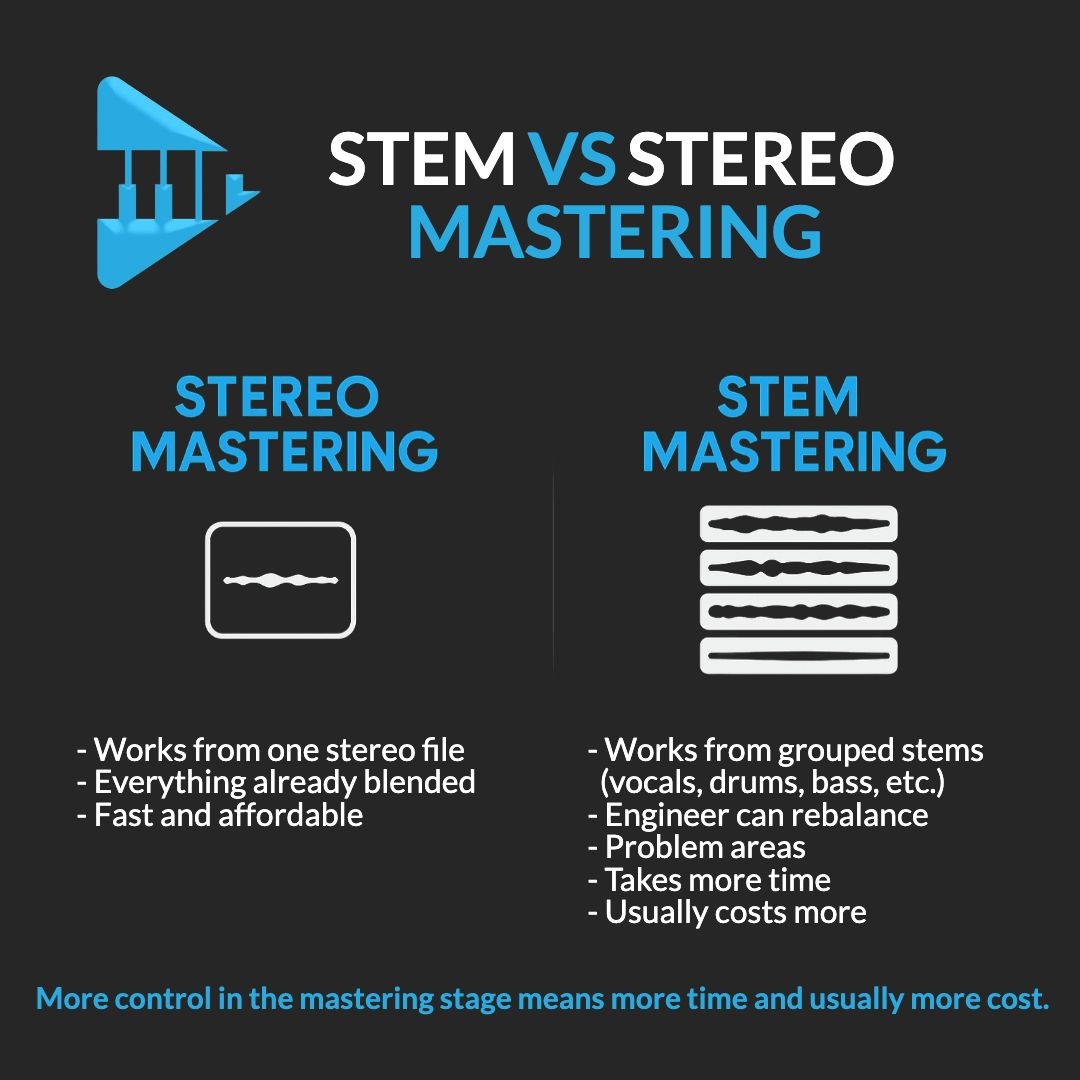
A stereo master works from one single stereo file. Everything is already baked together. This is the standard option, and it is what most tracks need.
A stem master works from grouped stems. One stem for vocals. One for drums. One for guitars or synths. The engineer can adjust each group before finalising the master. More control means more time, and more time usually means a higher cost.
When Stereo Mastering Is Enough
Stereo mastering is perfect when:
- Your mix already feels balanced
- The track is simple
- You trust the mix engineer
- You are working on singles or early releases
Most indie artists fall into this group.
When Stem Mastering Helps
Stem mastering makes sense when:
- Something in the mix is close but not quite landing
- You cannot get back into the mix session
- The vocal sits awkwardly
- The low end feels uneven
- The arrangement is busy
It acts like a safety net. You give the engineer a little more room to correct things without reopening the entire mix. For some tracks, that flexibility makes all the difference.
Digital vs Analog Mastering
Digital and analog mastering are often presented as two different worlds, but the gap is simpler than it sounds. Both approaches can sound great. The difference sits in the workflow, the time involved and the character they leave on your track.
Digital mastering uses software tools. It is fast, flexible and affordable. Most indie releases sit comfortably here because digital workflows make it easy to handle revisions, alternate versions and quick turnarounds.
Analog mastering uses physical hardware. Those machines take time to set up, and each track needs careful adjustment. Engineers who work in analog rooms usually bring years of ear training with them, and part of the higher price comes from that experience as much as the gear.
Analog is not automatically better. Digital is not a compromise. It depends on the personality of your track and how important the release is. An emotional single, a stripped-back acoustic piece or a full album might benefit from analog character. A polished pop track or electronic mix will often sit perfectly in digital.
Choose the approach that matches the music, not the prestige.
Online Mastering vs Human Mastering
Online mastering tools have exploded over the last few years. You upload a mix, pick a style and the platform spits out a finished file in minutes. For demos or rough ideas, the price makes sense. It’s cheap and fast. The limitation is that the software reacts to patterns, not intention, so it tends to treat every mix in broadly the same way.
Most artists end up asking the same thing at some point: is online mastering worth it? It’s a fair question, especially when online tools cost a fraction of what an engineer charges. The truth is, it depends entirely on how solid your mix already is and how important the release feels.
A human engineer listens differently. They can hear when a mix needs a small adjustment before the actual mastering begins. They know when the vocal feels sharp or the low end pushes too hard. They can prepare alternate versions properly, catch technical issues and make choices the software cannot see.
Production Expert puts it plainly in their comparison of mastering options. Automated services tend to keep things safe. They lift the level and smooth the edges, but they do not make the artistic decisions a human will make.
Online mastering works when:
- the mix is already clean
- the track is simple
- the release is low stakes
- you just need something quick
A human engineer is worth it when:
- the mix has issues
- you need radio edits or alternate versions
- your genre relies on subtle detail
- you want someone who understands the intention behind the song
Neither option is wrong. It depends on the music in front of you and what you expect from the release.
“A human engineer is worth paying when you’re creating something for art, passion or pride. For library music and production music, an AI or online mastering tool can often be enough.”
– Bobby Cole
Many artists end up wanting something in between. Not as blunt as cheap online mastering, but not as expensive as bringing in an engineer for every single track. That gap is exactly where a third option now sits.
AI Mastering Costs: A New Option Inside Melody Rights
A lot of artists end up stuck between two choices. Pay for a human engineer, or settle for the cheapest online tool you can find. That middle ground never really existed. This is why we built AI Mastering directly into Melody Rights.
Instead of the usual complicated workflow, you just drop in your mix, choose a sound profile that suits the track, and adjust a simple slider to decide how gentle or firm the processing should be. The engine takes it from there, tightening the mix and giving it that finished feel without changing the soul of it.
The cost is straightforward. AI mastering is included in your Melody Rights plan. No per-track fees. No upsells for louder versions or “premium” settings. For artists who need something polished without burning £75 a track, it builds a bit of breathing room back into the budget.
This is not meant to replace a human on the releases that matter. It is the practical middle option that never existed before. Many musicians use the AI master for demos, early cuts and day-to-day uploads, then bring in an engineer when a single needs more care and intention. It gives you one more way to get your music over the finish line without lowering your standards.
If you want to try the AI mastering tool for yourself, it’s available inside your Melody Rights dashboard.
Whichever route you take, the price on the page is only part of the story. Most artists forget the small extras that creep into the final bill, and those are worth knowing before you hire anyone.
Hidden Mastering Costs You Should Know About
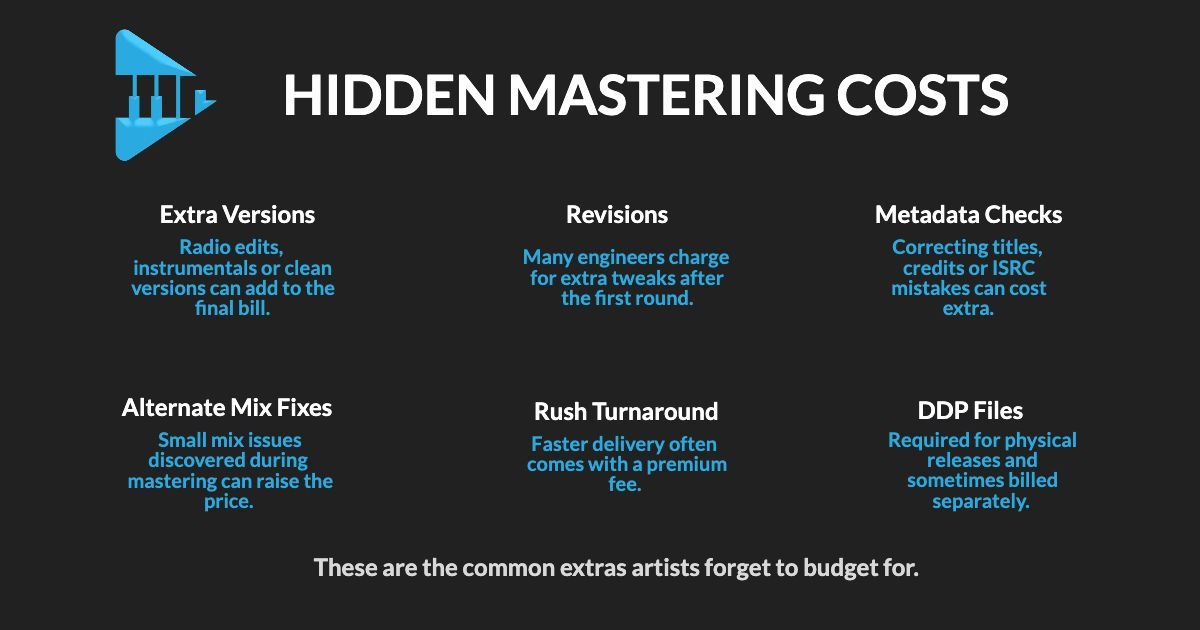
The most common add-ons are:
- extra versions or formats
- clean or radio edits
- ISRC embedding and metadata checks
- DDP files for CDs and vinyl
- revision fees after the first couple of rounds
- rush turnaround charges
None of these are unusual. They just take extra time. Ask your engineer what’s included before you start and you’ll avoid surprises later.
If you want to make sure the mastered track is also set up to earn, our guide on how to register your music properly is a good next step.
A Quick Example of How Mastering Costs Change
A songwriter finishes a track and sends it for a basic stereo master. The engineer comes back saying the vocal is fighting the low end. A stereo master would only make the problem louder. The artist upgrades to stem mastering so the engineer can rebalance the vocals and drums before finishing the master. The final cost is higher, but the result is a track that translates properly on streaming.
How to Choose the Right Mastering Option
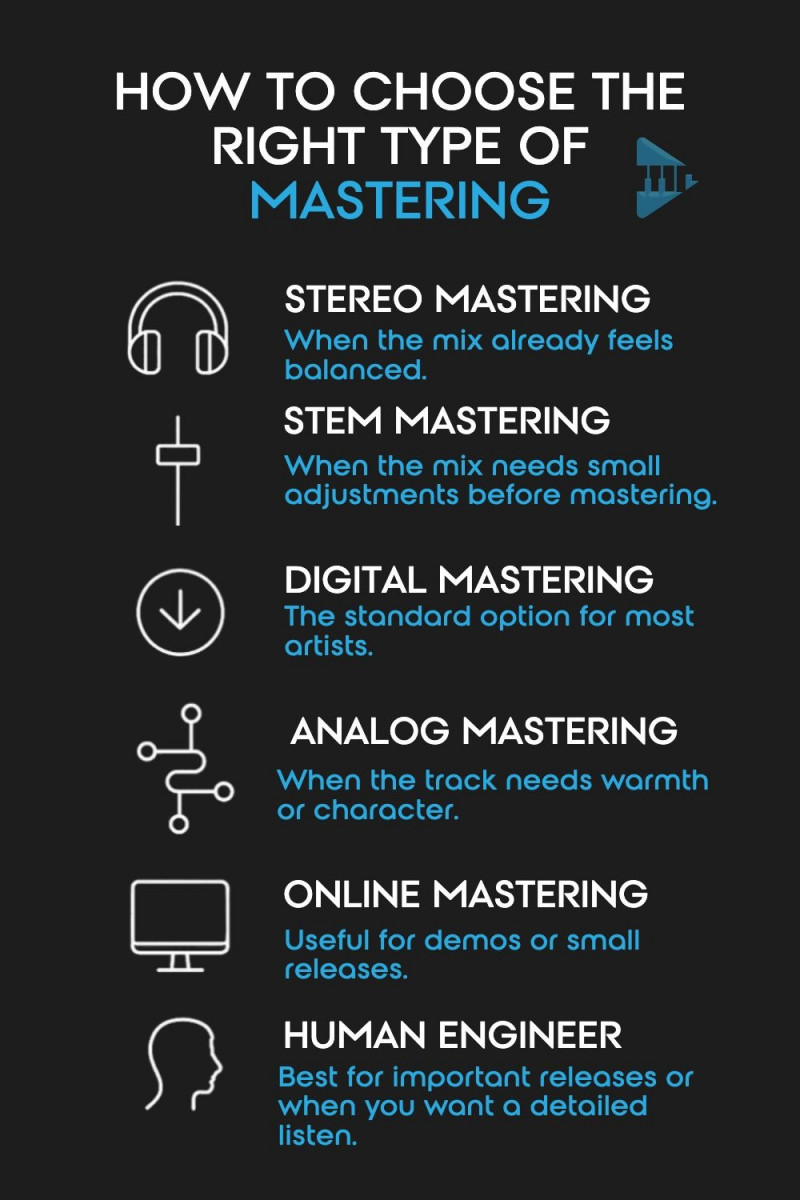
If you want a quick way to decide without overthinking it, start here:
- Choose stereo mastering if the mix already feels balanced.
- Choose stem mastering if something sounds close but not quite right.
- Choose digital mastering for most modern indie releases.
- Choose analog if the track benefits from warmth or character.
- Choose online mastering only when the release is low stakes.
- Choose a human engineer when the track actually matters.
- Ask what’s included so you don’t get caught by hidden fees.
FAQs: Mastering Costs and What Artists Need to Know
Do I actually need mastering for my track?
Most artists end up needing it. You can upload a mix as it is, but it usually won’t hold up on streaming. Levels jump around, and some distributors knock it back for technical reasons. Mastering is the bit that stops those problems before they happen.
Is online mastering good enough?
Sometimes. If your mix is already clean and you just need something quick for a low-pressure release, it does the job. When the track matters, or if anything feels slightly off, most artists prefer a human engineer who can actually listen to the intention behind the song.
Why does stem mastering cost more?
The engineer isn’t just working with one file. They’re dealing with groups of sounds – vocals, drums, guitars, whatever you send. That takes longer, and it gives them more control. More control usually means more time, which is why the cost sits higher.
Does mastering affect royalties or distribution?
Indirectly, yes. A badly prepared master can get flagged for loudness issues or weird dynamics. Sometimes that hurts the way platforms treat your track. A clean master avoids those technical headaches.
After the Master: What Happens Next
After mastering, your track needs to be registered in the right places. Many artists assume the distributor covers everything, but that is not the case. Melody Rights fills those gaps. We handle extra registrations and metadata checks so the track is set up ready to collect from a wider range of sources. This includes neighbouring rights, sync, mechanicals and content ID. It does not promise earnings. It simply helps make sure the admin is handled properly.
“Most artists assume their distributor covers everything. They don’t. If your work isn’t registered properly, you won’t get paid. That’s why we built Melody Rights, to stop tracks falling through the cracks.”
– Bobby Cole
If you want to see where the gaps usually appear, our guide on how to register your music properly walks through every step. It shows what distributors actually handle, what they skip, and why those missing registrations are where most indie artists lose income.