
Quick answer
Platforms for musicians are tools that handle different parts of a modern music career, like releasing music, promotion, file storage, admin, and royalties. Most artists don’t choose lots of platforms at once. They add them over time as new needs appear, which often leads to platform overload rather than clarity.
Platforms for Musicians: Why Most Artists Feel Overloaded
Most musicians don’t decide to use loads of platforms. It just sort of happens.
You release something, so you sign up somewhere. You want people to hear it, so you add something else. Then you need somewhere to keep files, somewhere to track what’s going on, somewhere to deal with money. None of it feels like a big decision at the time.
Then one day you realise you’re juggling a lot more than music.
Most searches for platforms for musicians start the same way. What’s out there, what am I missing, which ones am I actually meant to be using. The assumption is that there’s a right stack you just haven’t found yet.
Once you understand how a modern music career is structured, the next frustration usually shows up somewhere else.
What people don’t usually ask is why the stack keeps getting bigger, even when they’re already doing what they were told to do.
Why musicians end up using so many platforms
This isn’t about starting out anymore. It’s about what happens once you’re already trying to make things work.
A modern music career is split into pieces.
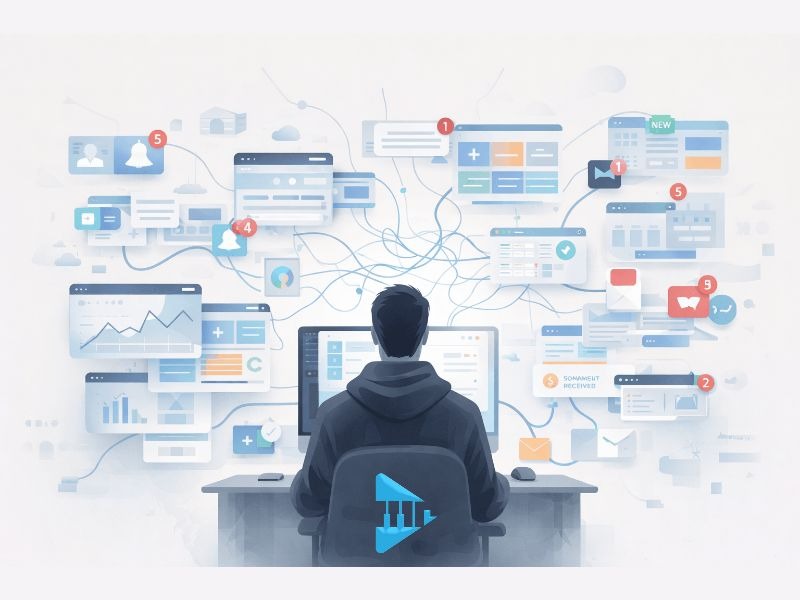
Releases sit in one place, promotion lives somewhere else, files live somewhere else again. Admin, money, pitching, all handled separately. Each platform is built to do one job well, and then it stops.
So artists do what makes sense. They add another platform when a new job appears. Over time, that turns into a patchwork of tools that were never designed to work together.
It isn’t chaos. It’s just accumulation.
What each platform is supposed to handle
Most platforms for musicians promise clarity around a specific problem.
Most platforms for musicians are built around a single promise. Whether it’s getting music out, reaching listeners, staying organised, or understanding income, the idea usually sounds sensible in isolation.
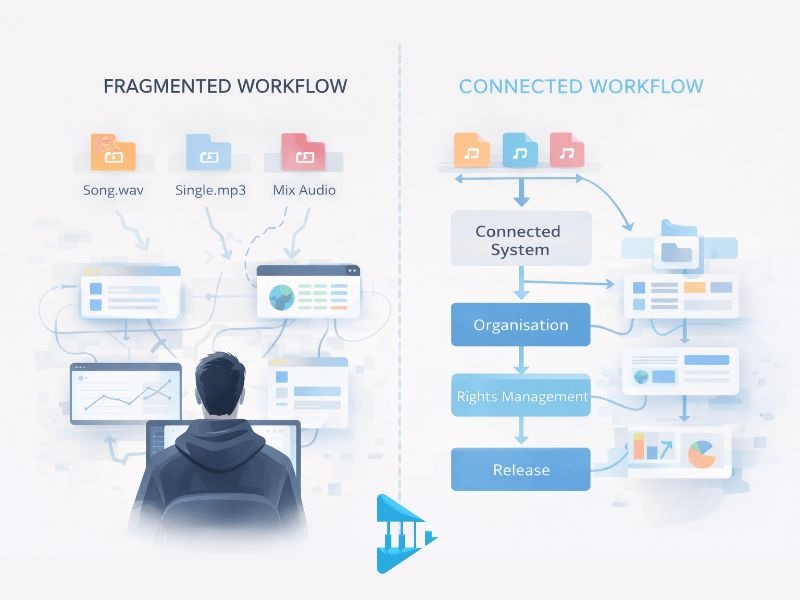
The trouble starts when the same music exists in multiple places, each with slightly different information attached to it. Versions drift. Details don’t quite match. You start double-checking things you already did.
Industry coverage reflects this tension beyond just anecdotes. Reports like Why Independent Artists are Moving Away from Dominant Streaming Platforms – The Playground discuss how many musicians are rethinking their relationship with traditional digital platforms and looking for ways to escape the noise and complexity that comes with them.
That’s usually when the workload starts to feel heavier than it should.
Why more platforms haven’t made things easier
Most of these tools were meant to make things easier.
In reality, they often move it around. You fix one issue, then spend time maintaining the fix. You solve one gap, and it creates another somewhere else. Nothing fully breaks, but nothing fully settles either.
That’s the difference between being supported by tools and being surrounded by them.
When platforms don’t talk to each other, artists pay the price
Disconnected platforms don’t fail loudly.
They fail quietly. Files get mislabelled. Opportunities come in when the right version isn’t ready. Money becomes harder to trace than it should be. You spend time checking instead of moving forward.
DIY artist Mike Lewis from The Bolsheviks described it in a way a lot of musicians recognise:
“I was spending more time managing emails than making music. Everything felt scattered.”
That scattered feeling isn’t about ability. It’s about systems that stop at their own edges.
That kind of fragmentation isn’t rare. We’ve seen the same pattern play out with artists like Zac and The New Men, where the music was moving forward but the systems underneath weren’t set up to support it properly.
How Zac and The New Men collect music royalties
The hidden cost of managing platforms instead of building a career
The real cost of platform overload isn’t just subscriptions.
It’s attention. Every extra login pulls you out of creative headspace. Every duplicate task chips away at momentum. Over time, it gets harder to tell what’s actually helping and what’s just noise.
This is usually where burnout starts to creep in, not because something has gone wrong, but because everything takes more effort than it should.
What musicians actually need from platforms today
Most artists aren’t looking for another app.
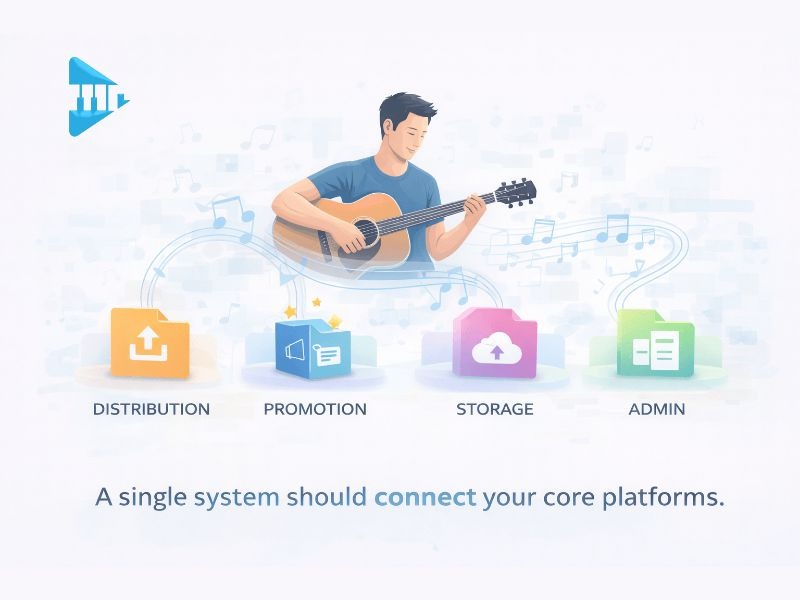
They’re looking for fewer places to check, fewer things to repeat, and some sense that the work they’re doing connects. They want their music, information, and decisions to live in the same conversation.
That’s a structural need, not a feature request.
Why some artists are stepping away from tool-first thinking
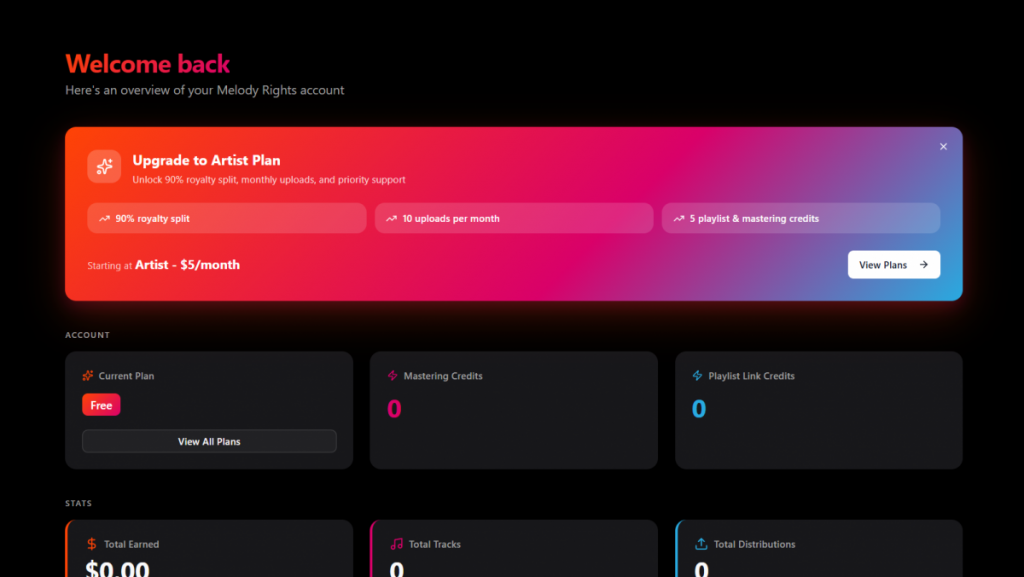
Instead of asking what to sign up for next, some artists are starting to ask how their career is meant to function as a whole. Melody Rights was built to treat the music career as a connected system, not a collection of separate tools.
That shift is quiet, but it changes everything.
If you want the bigger picture before platforms enter the conversation at all, how to start a career in music lays out how a modern music career is actually structured.
FAQ
What platforms do musicians usually end up using?
Most musicians use several platforms at once, often one for releasing music, another for promotion, somewhere to store files, and something else to track admin or money. The tools vary, but the pattern is consistent.
Do musicians really need multiple platforms?
In many cases, yes. The problem isn’t using more than one platform. It’s being responsible for keeping them all aligned when they weren’t designed to work together.
Why do platforms for musicians feel overwhelming?
Because each platform handles a single task, while musicians are left managing how everything fits together. The workload doesn’t disappear, it just moves into the gaps between platforms.
Is there an all-in-one music platform?
Some platforms aim to bring more of the workflow together, including Melody Rights. But the bigger shift isn’t finding a perfect all-in-one. It’s recognising when platform stacking has turned into platform overload.
How do musicians manage everything online without burning out?
Burnout usually comes from fragmentation rather than effort. When artists spend more time managing platforms than moving their career forward, the work starts to feel heavier than it needs to be.