
Quick Answer: How to Promote Your Music Independently (DIY Artist Guide)
You promote your music independently by choosing a few channels you can actually maintain, sharing small parts of your process, planning your release timeline, and giving listeners a simple way to stay close to your work. Promotion works best when you focus on the right people, not the biggest crowd. It also helps when the admin around your music is sorted, because opportunities tend to appear when you aren’t expecting them. A steady plan you can keep up with will take you further than posting constantly.
Promoting Your Music
Promotion isn’t just about getting your music heard. It’s about helping the right people find something in your work that feels like it belongs to them. When that connection happens, things move. Not because you post more, but because someone actually feels what you’re doing.
Most DIY artists already know that posting for the sake of posting doesn’t do much. You have weeks where ideas flow and weeks where you’re unsure what to say. That’s normal. What matters is having a clear, simple way for listeners to find you and stay with you.
Promotion also becomes easier when the background parts of your music are sorted. A lot of DIY artists carry quiet stress around rights and registration, even if they don’t talk about it. When those things are organised, you’re not worried about what might go wrong once a song starts getting attention. That’s where Melody Rights fits in. It clears space so your promotion is focused on connection, not admin.
Let’s start with the foundation.
Know What You’re Really Sharing
Start With Your Story Instead of Your Links
People connect with music because they recognise something in the person behind it. It doesn’t need to be dramatic. It might be how you write, the mood you carry, or the ideas that shape your sound. Those small details often stick with listeners more than the song announcement itself.
Take a moment to get clear on what you want people to feel when they meet your music. Promotion becomes simpler once you know that.
A Quick Example: When Story Comes Before Promotion
Think about someone like Billie Eilish in her early days. People didn’t follow her because she was everywhere online. They followed her because they understood the world she was building. The soft vocal style, the close-knit writing with her brother, the way she talked about her ideas. Those details made listeners feel like they recognised her. The connection came first. The promotion followed naturally.
You can do the same. Once the story is clear, sharing feels easier and more honest.
Keep It Honest
You don’t need a polished brand or a character. A simple explanation of who you are and what you care about is enough. When listeners understand you, they stay.
Set Up a Home Base You Can Maintain
Make It Easy for People to Find You
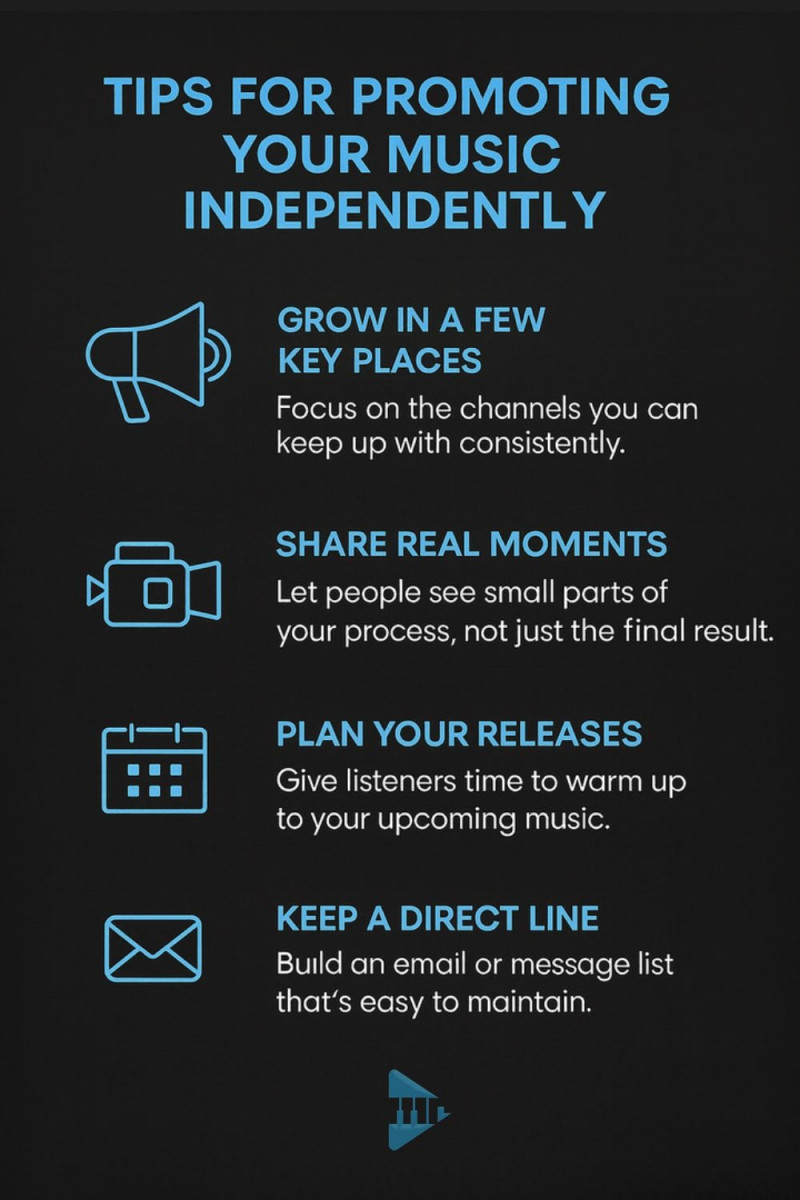
DIY artists don’t need more platforms. They need a setup they can actually keep alive. A place for your music, a place for updates, and a direct line to people who want to hear more.
Most artists do well with something simple:
- a streaming profile
- one social platform
- an email list or message list
That’s enough to build real connection.
Show the Essentials Clearly
Wherever someone finds you, make the important parts obvious:
- who you are
- what your music sounds like
- your latest release
- how to reach you
You don’t need heavy visuals or complex branding. You just need clarity.
Use a Clean, Professional Playlist Link
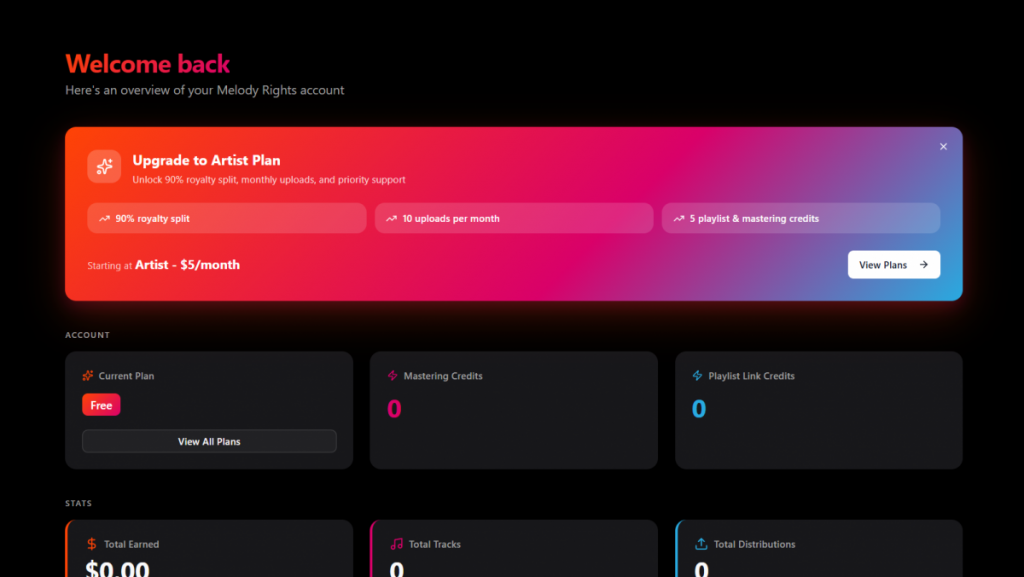
You can also prepare a tidy playlist link for anyone who wants to hear your best work. Tools like DISCO are industry-standard for this, but Melody Rights now includes the same style of private, shareable playlists inside your account. It keeps things simple when you’re pitching to bloggers, small labels or music supervisors.
Share Your Music Through Moments, Not Pressure
Pick a Few Places to Show Up
Some artists love video. Some prefer photos or small updates. You don’t need to change your personality. Choose two places that feel natural and show up there consistently.
Share Small Pieces of Your Process
People enjoy seeing how music takes shape. A quick clip of a melody, a line you liked, a voice note moment, or a detail about how the track came together. You don’t need to reveal everything. Just enough for someone to feel connected.
Let Your Rhythm Be Realistic
Posting every day isn’t sustainable. A couple of steady updates a week will do far more for you than any short burst where you burn out.
Common Mistakes DIY Artists Make
A few things we see DIY artists run into again and again:
- Sharing links without warming people up
- Posting every day for a week, then disappearing
- Waiting until release day to start talking about the song
- Relying only on friends and family for early streams
- Setting up too many platforms to keep alive
These aren’t failures, they’re just common traps. Once you notice them, promotion becomes easier to control.
For deeper help choosing platforms, you can explore our guide on websites to upload music for free and get discovered.
A quick note from Bobby Cole (Founder of Melody Rights)
“The biggest mistake indie artists make promoting their music is sending WhatsApp messages to friends asking them to stream the new track. It’s pointless. It doesn’t grow real listeners.”
– Bobby Cole, Composer & Founder of Melody Rights
Create a Release Plan You Can Stick With
Warm People Up Slowly
Avoid releasing without preparation. A few weeks of gentle build up helps people understand something is coming. It doesn’t need to be loud. A short preview, a story behind the track, or a small clip is enough.
A real example of why warm-up matters
When we talked with Spencer Segelov about his release patterns, something stood out. The launches that fell flat were always the ones he’d rushed. No build-up, no context, just a post and a link. The releases that travelled further were the ones he’d warmed people up for -sharing small ideas, early moments, or what the song meant to him. Even gentle preparation made a difference.
Keep Talking About the Song After It’s Out
Many DIY artists go quiet immediately after releasing music. That’s often when new listeners first arrive. Share a couple of moments around the track. Early reactions. Your favourite lyric. A small acoustic bit. These things keep the song moving.
Let Each Track Live Longer
One song can travel further than you expect. You can share different versions, a rehearsal clip, a background note, or a moment where someone used the track in a video. Promotion doesn’t end the week you release. It grows slowly.
If TikTok is part of your plan, our guide on how to upload music to TikTok for free walks you through the practical side.
Build a Place Where Listeners Can Stay Connected
Create a Direct Line
When someone cares about your music, they want an easy way to stay close. A small email list or community space is enough. It doesn’t need to be complicated.
Keep It Low Pressure
You don’t need long updates. A simple message when something is happening is enough. Direct communication builds trust faster than any algorithm.
Use Collaboration as a Natural Part of Your Growth
Work With People Who Fit Your Sound
Collaborations aren’t about chasing reach. They’re about working with people who share your taste. When two artists genuinely fit, both audiences benefit.
Keep It Genuine
Listeners can feel when a collaboration makes sense. They can also feel when it doesn’t. Choose relationships that feel natural.
If you’re thinking about distributing your music more widely, our guide to independent music distribution companies gives a clear comparison.
Promotion Works Better When Your Rights Are Ready
DIY artists often separate promotion from rights, but they’re connected. When your music starts moving, unexpected moments appear. New plays. New reposts. A video using your track. A sync moment here and there. These things matter. You don’t want to be sorting out admin while your song is gaining attention.
Some of those moments even turn into real sync opportunities. Melody Rights now brings global sync briefs straight into your dashboard, so when something lands that fits your sound, you can pitch a track immediately without juggling extra subscriptions or platforms.
When your rights are registered, your splits are clear, and your music is set up properly, you’re protected. You’re ready for good surprises. You’re not scrambling.
If you’re new to performance rights, PRS for Music has a simple breakdown of what they cover.
That’s the part Melody Rights handles. It works quietly in the background so your catalog stays organised. Your music is ready for the attention you’re working hard to attract. It also means you’re not losing royalties because of small gaps in admin.
If you want to understand the basics, you can explore:
- How to register your music properly
- The difference between master and publishing rights
- Sync licensing opportunities
Knowing these things even at a simple level makes you stronger during promotion.
Want your catalog ready before you start promoting?
Melody Rights keeps the admin side organised so you can focus on the creative and promotional work.
A Simple 30-Day Promotion Plan
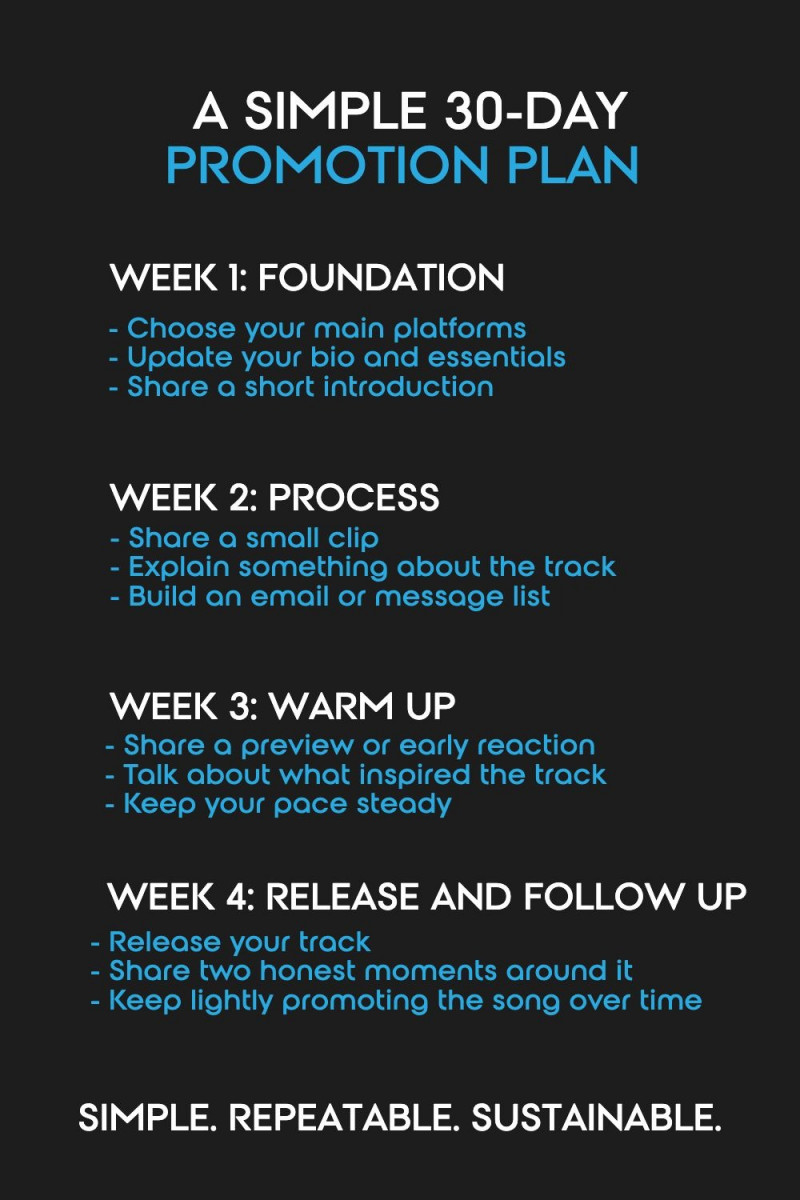
Week 1: Foundation
- Choose your main platforms
- Update your bio and essentials
- Share a short introduction
Week 2: Process
- Share a small clip
- Explain something about the track
- Build an email or message list
Week 3: Warm Up
- Share a preview or early reaction
- Talk about what inspired the track
- Keep your pace steady
Week 4: Release and Follow Up
- Release your track
- Share two honest moments around it
- Keep lightly promoting the song over time
Simple. Repeatable. Sustainable.
Make Your Music Ready for the Moments You Can’t Predict
Promotion helps people discover your music. When that starts happening, you don’t want to be fixing the admin behind your songs. Melody Rights gives you structure so you’re not losing time, energy, or royalties. You make the music. It keeps your catalog ready for wherever it goes next.
When your music starts travelling, you want the right tools behind you, not more things to manage. Melody Rights gives you clean playlists for pitching, sync leads you can act on, and a simple way to keep your catalogue ready for whatever comes next.
FAQs
How often should I promote my music?
A couple of times a week is enough if you’re steady.
Do I need every platform?
No. Two or three you can maintain will outperform trying to be everywhere.
Can one song grow over time?
Yes. Most songs grow slowly. Promotion gives them room.
Where does Melody Rights fit in?
It keeps the background work of your music organised so your promotion efforts don’t slip through the cracks.
Closing
Promotion doesn’t need to feel heavy. It doesn’t need to be loud. It just needs to be something you can keep going without losing yourself in the process. When you understand what you’re sharing, choose the places where you feel comfortable, and keep your music organised behind the scenes, you create space for real listeners to find you.
You make the music.
Melody Rights makes sure it’s ready for the journey.