
Quick Answer: How to Submit Music to Record Labels?
If you want to submit music to record labels free and actually get heard, the way you send it matters more than most artists realise. Send it as a single playlist link that opens instantly in the browser and plays your tracks without downloads, logins, or extra steps.
The easier it is to listen, the more likely it is your music gets a proper chance.
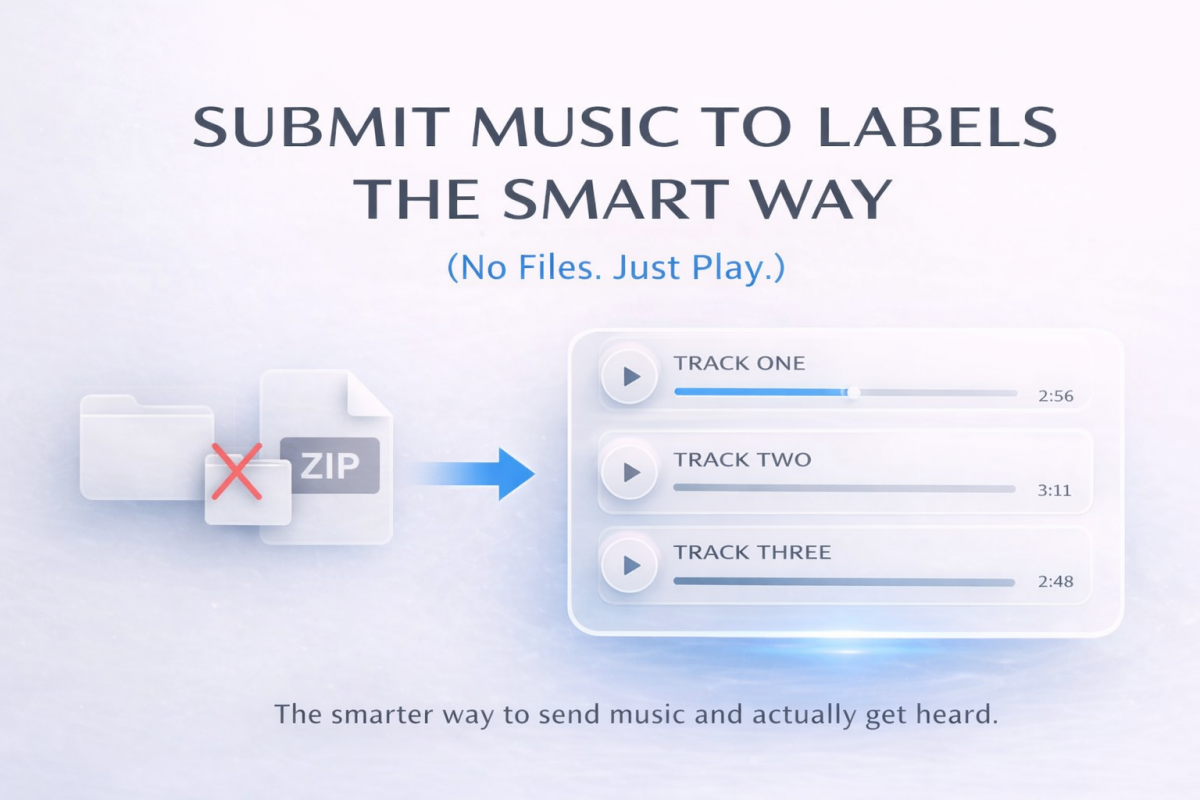
What actually happens when someone listens to your music
There’s a gap between how artists think this works and how it usually plays out.
You send your music and assume it gets a fair listen. Someone sits with it, gives it time, maybe even comes back to it.
In reality, it’s far less deliberate.
Your track arrives alongside other music, other messages, other priorities. The person listening is not in a vacuum. They press play, and within a short space of time they’ve already decided whether they’re continuing or moving on.
That decision isn’t always about the music alone.
It’s influenced by how quickly they can access it, whether the starting point makes sense, and whether anything interrupts that first impression.
Most decisions happen quietly at this stage, and most artists never see them happen.
The 3 ways artists submit music (and why only one works)
After a while, patterns become obvious. Most submissions fall into one of three categories.
1. The Dump
This is what most artists default to.
A couple of links. Maybe a file attachment. Sometimes both. It feels simple from your side, but on the receiving end it creates friction straight away.
They’re immediately asking themselves:
- What do I open first?
- Do I need to download this?
- Which track actually matters?
None of these are major problems on their own, but together they’re enough to slow things down and lose attention.
2. The Overload
This one looks more prepared.
More tracks, more options, more to show.
The thinking is that giving a wider selection improves your chances, but in practice it often does the opposite. Without a clear starting point, the listener has to decide what matters before they’ve even heard anything.
That’s usually where attention drops off.
3. The Browser-Ready Pitch
This is where things shift.
Instead of sending music in pieces, you send a single link that opens into a clean, playable page.
Everything is already there:
- Tracks in order.
- Artwork visible.
- Playback built into the page.
No downloads. No accounts. No extra steps.
They press play and immediately understand what they’re hearing.
What the person actually sees when they open your music
This is the part most artists never think through clearly.
When you send music through a structured playlist link, the person receiving it doesn’t land on a folder or a profile. They land on a standalone page designed for listening.
There’s no login required. No account to create. If they have the link, they can access it immediately.
The tracks are laid out clearly. Artwork is visible. The order is already set. It behaves in a way that feels familiar, similar to opening a streaming platform, but without the distractions or the need to search for anything.
Everything plays directly in the browser.
That means there’s no break between curiosity and listening. The moment they click, they’re already hearing your music.
Why this matters in real situations
This isn’t just about record labels.
The same moment happens whenever your music is being considered for something.
- A promoter checking whether to book you.
- A collaborator deciding whether to work with you.
- A supervisor reviewing tracks for a project.
- A manager or publisher assessing potential.
In all of these situations, the process is the same. Someone clicks a link and decides, quickly, whether they keep listening.
The format you send your music in either supports that moment or works against it.
This is what most “music submission tips” miss. It’s not just where you send music to A&R, it’s how it arrives.
Why common tools fall short
It’s worth being clear about why the usual options don’t fully solve this.
Dropbox is built for storage.
It works, but it adds steps. Files need to be opened or downloaded, and the experience isn’t designed around listening.
SoundCloud is built for music, but it’s public-facing and not designed for controlled presentation. It works well for discovery, but less well when you want to present a focused set of tracks in a specific order.
Neither of them are built specifically for:
Sending a small, intentional selection of music for someone to review properly
What a strong submission actually looks like
You don’t need a long list of tracks or your full catalogue.
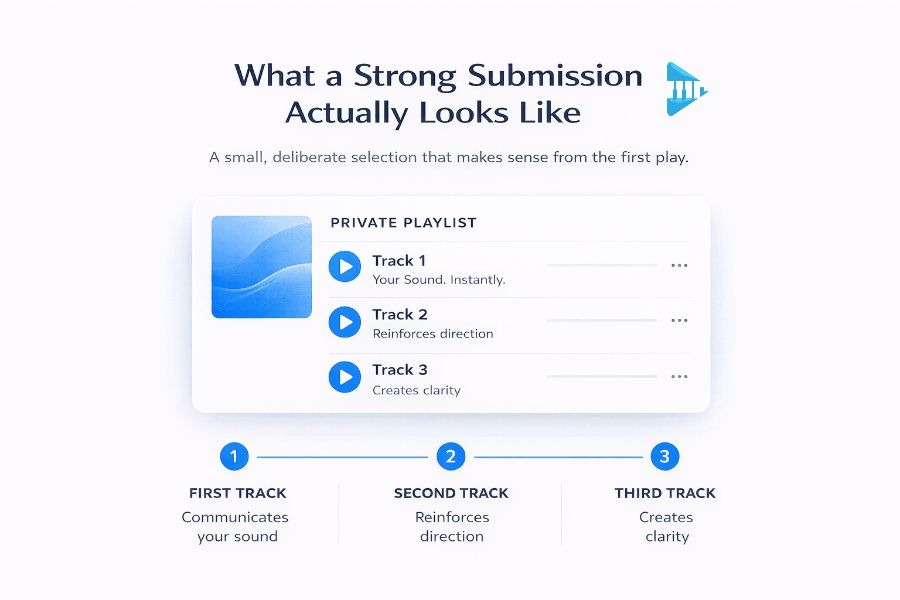
What works is a small, deliberate selection that makes sense from the first play.
- The first track should communicate your sound quickly
- The second should reinforce that direction
- By the third, the listener should understand what you do
Order matters because attention is limited.
If the first track doesn’t land, the rest often don’t get heard.
Where organisation quietly affects everything
Presentation only works if what’s behind it is structured.
If your tracks are inconsistent, poorly labelled, or scattered across different versions, that lack of clarity carries through into how your music is experienced.
That’s why it helps to have a solid understanding of what a music catalogue is, because the way your music is organised behind the scenes directly affects how easily it can be presented when it matters.
Where Melody Rights fits into this
For a long time, this step sat outside everything else.
You’d make your music in one place, organise it somewhere else, then use another tool just to present it properly. That fragmentation is a big reason many artists never fully fix this part of the process.
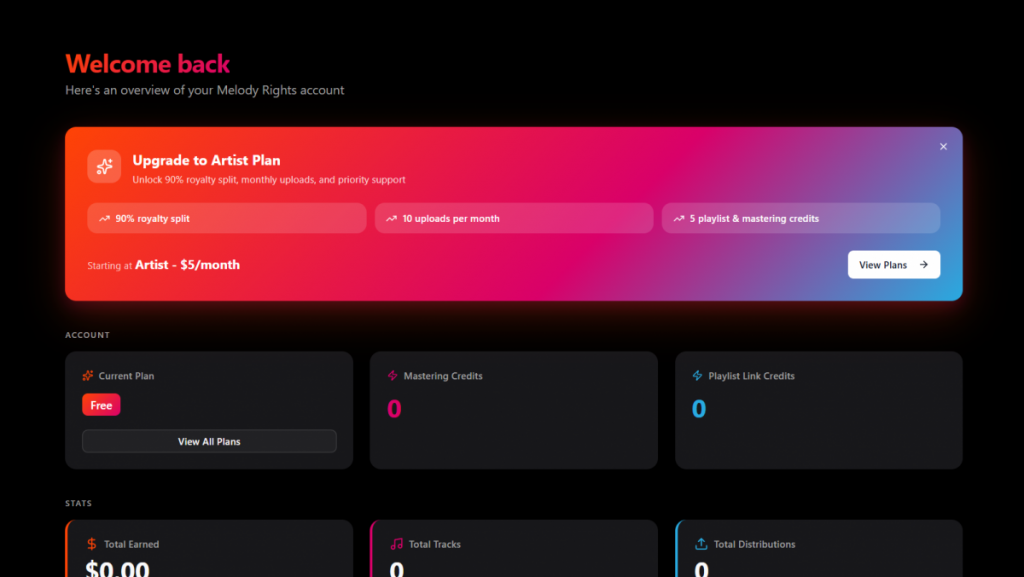
What’s changing now is that presentation can sit inside the same environment where you’re already working.
You can:
- Upload your track
- Organise your catalogue
- Select your songs
- Control the order
- Generate a shareable link
All without switching platforms or rebuilding your workflow.
Founder Insight
“If someone has to think about how to listen to your music, you’ve already made it harder than it needs to be.”
— Bobby Cole
A quick reality check
None of this guarantees a response.
What it does is remove one of the most common problems, which is your music not being heard properly in the first place.
Once that’s handled, the outcome is based on the music, not the process around it.
Where to go next.
Create your first playlist inside Melody Rights and start sending your music in a way that actually gets heard.
Once your music is easy to access and understand, everything else becomes easier to build on.
- How to make money from music online
- Music sync opportunities and licensing pipelines
- Independent music distribution companies explained
FAQs
How do I submit music to record labels for free?
You can submit music to record labels for free by sending a direct playlist link instead of files. The key is making your music easy to play instantly, without downloads or logins, so it actually gets heard.
What’s the best way to send music to A&R?
Send a small, focused playlist of 2–3 tracks in a clear order. This helps A&R understand your sound quickly without having to figure out where to start or what matters most.
Should I send files or a playlist link?
A playlist link is more effective. Files and Dropbox links add friction, while a browser-based playlist lets the listener press play immediately and stay focused on the music.
How many songs should I send to a record label?
2-3 strong tracks is enough. Sending too many can dilute your impact, especially if there’s no clear starting point.
Final thought
Most artists focus on getting their music in front of the right people.
That matters, but it’s only part of the equation.
What happens in the moment someone presses play is just as important, and that’s something you can control far more than most people realise.
Fact-checked by Bobby Cole, music rights specialist.