
How to Get Paid for Your Music After Release
You release a track, it lands on Spotify, Apple Music, YouTube, TikTok, and after a little while, the streams start moving. People are listening, sharing it around, maybe even adding it to playlists, so from the outside, it feels like things are finally working.
Then you check what actually got paid.
Not necessarily nothing, which almost makes it more confusing, but definitely not what you thought those numbers would look like. That’s usually the point where artists realise releasing music and getting paid properly are two completely different systems sitting underneath the same song.
Most independent artists are only connected to part of the royalty infrastructure. The music itself might be generating activity across multiple platforms and territories, but the setup behind the scenes is often incomplete, which means income gets delayed, fragmented, or quietly lost without anybody noticing straight away.
This guide breaks down how artists actually get paid after release, where royalties tend to disappear, and how to make sure your music has a proper financial route back to you.
The Short Answer
Getting paid for your music involves more than uploading a song through a distributor. Streaming income, publishing royalties, performance royalties, and international collections all move through different systems. If those systems are not properly connected to your music and ownership information, some royalties may never fully reach you.
What Most Artists Think Happens
The assumption
Upload song → streams happen → Spotify pays artist
Simple, clean, one pipeline.
That’s what most artists believe when they first release music.
What actually happens
Your music splits into multiple rights systems the moment it goes live.
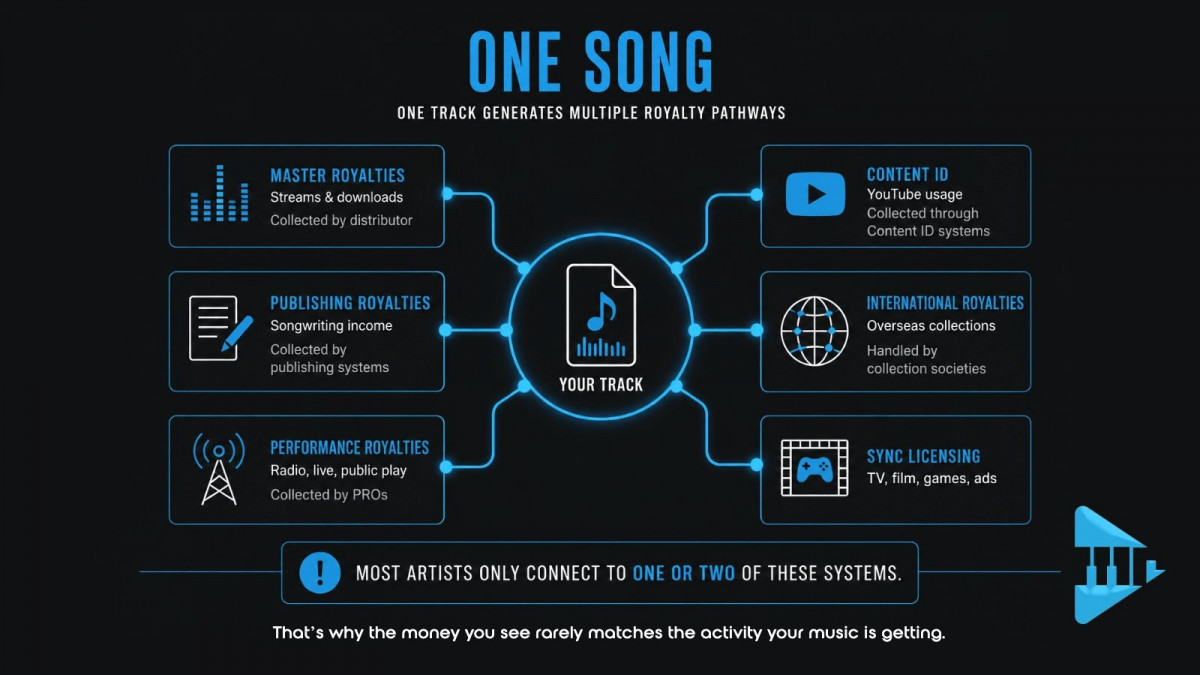
| Income Source | What Generates It | Who Usually Collects It |
| Master royalties | Streams/downloads | Distributor |
| Publishing royalties | Songwriting usage | Publisher/admin |
| Performance royalties | Radio/live/public play | PRO |
| Mechanical royalties | Reproduction/streaming | Publishing systems |
| International royalties | Overseas usage | Collection societies |
| Content ID income | YouTube user content | Content ID systems |
| Sync licensing | TV, film, games, ads | Licensing/sync deals |
This is why artists often feel like the numbers never quite match the activity around their music.
The systems are fragmented by design.
Why Aren’t You Getting Paid Properly for Your Music?
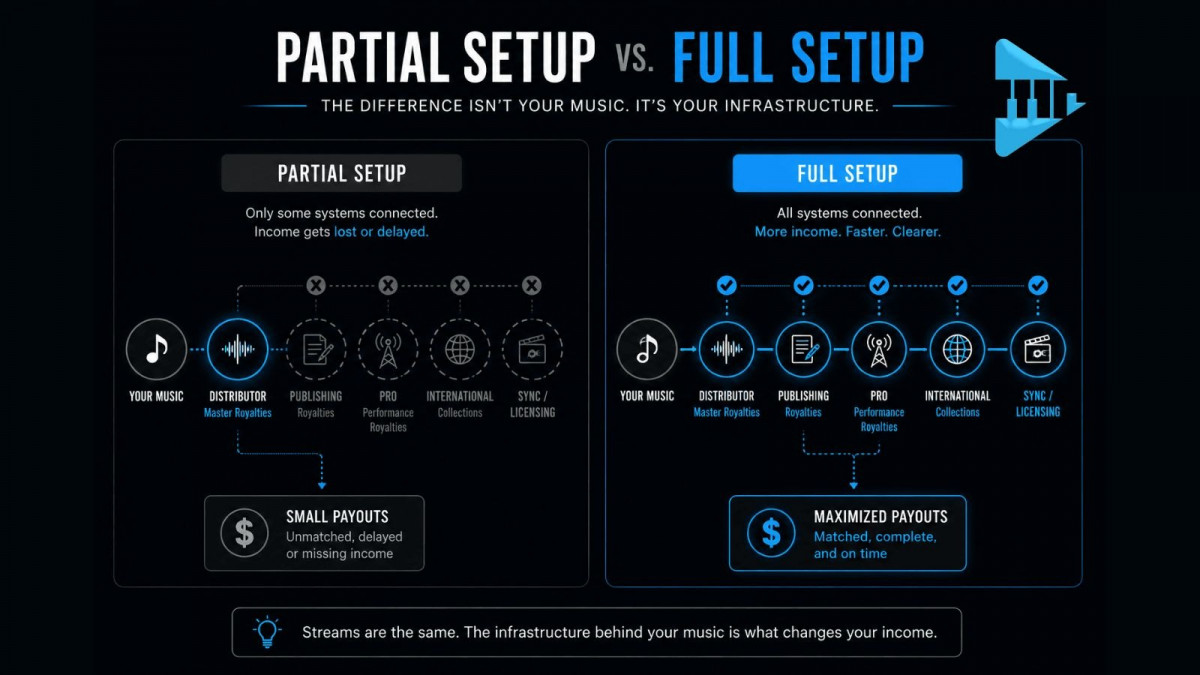
In most cases, nothing dramatic has gone wrong; the issue is usually an incomplete setup.
A distributor may be collecting your master royalties, but publishing registration was never finished. Metadata might not match across systems, split agreements may not exist and international collections may not be connected properly.
Each gap seems small on its own. Together, they create a slow leak across your income.
That’s why artists often say things like:
“My streams don’t match my payouts.”
“Why is my music not making money?”
“I know people are listening, so where is the income going?”
“Does my distributor collect everything?”
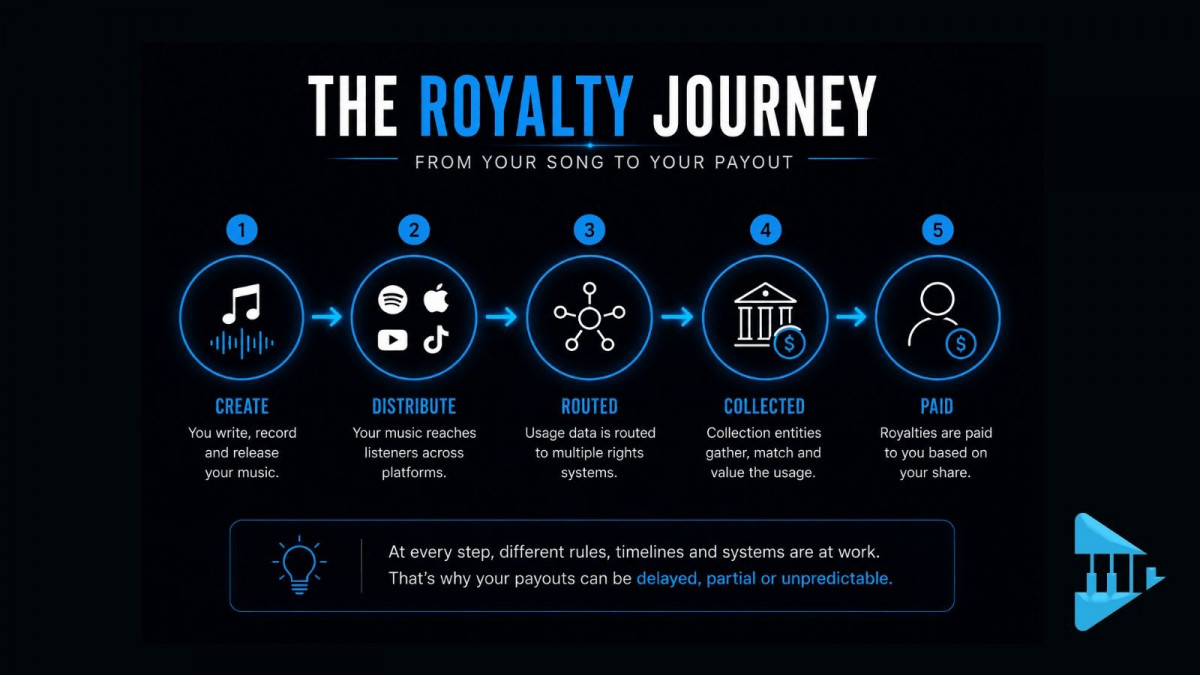
What Happens to Your Money After You Release a Song?
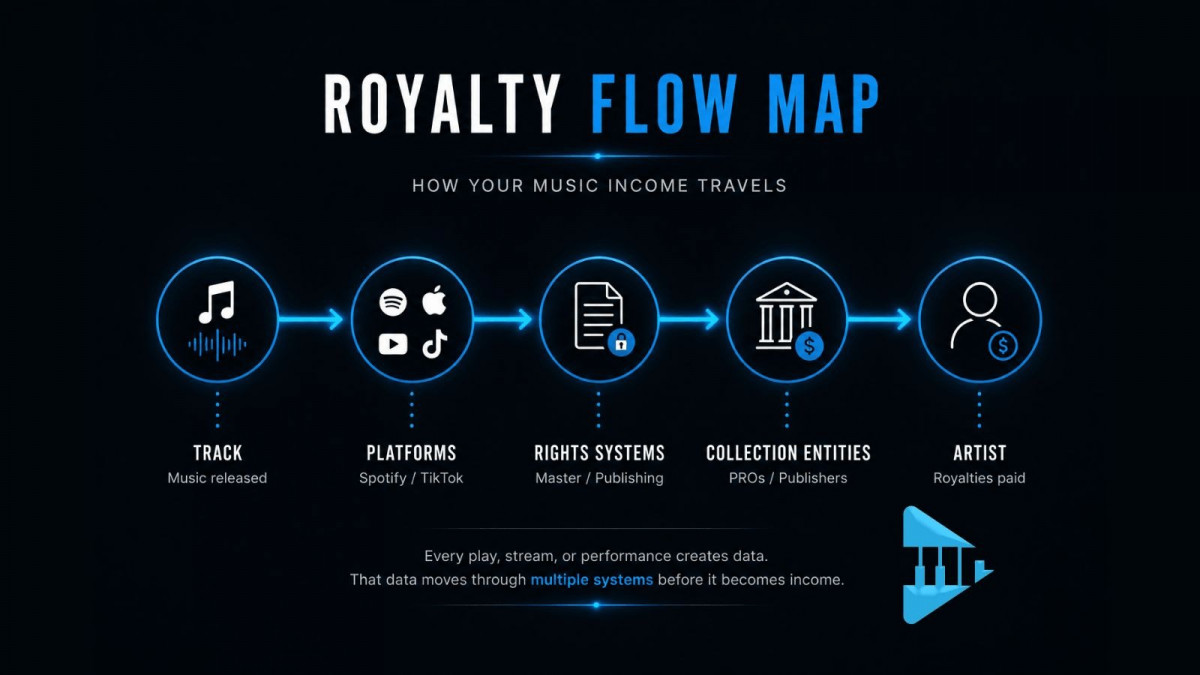
Once your track goes live, platforms begin tracking how the music is used.
Every stream, public performance, upload, replay, or broadcast creates data. That data feeds royalty systems.
The important thing to understand is that royalties do not move through one central pipeline.
- The recording creates one type of income.
- The songwriting creates another.
- Public performances are handled separately.
- International usage introduces additional collection systems again.
Each layer has different reporting timelines, different collection organisations, different payment schedules and different metadata requirements.
If you’ve already received payouts and struggled to understand them, our guide to understanding a royalty statement for music artists breaks down how those payments are structured and why they often feel disconnected.
Learn how royalty statements actually work for independent artists.
How to Get Paid for Your Music Properly
Up to this point, you’ve seen how income flows after release and where it often breaks down.
Now let’s simplify the setup itself.
This is the infrastructure side of being an independent artist.
Step 1: Release Through a Distributor, But Understand Its Limits
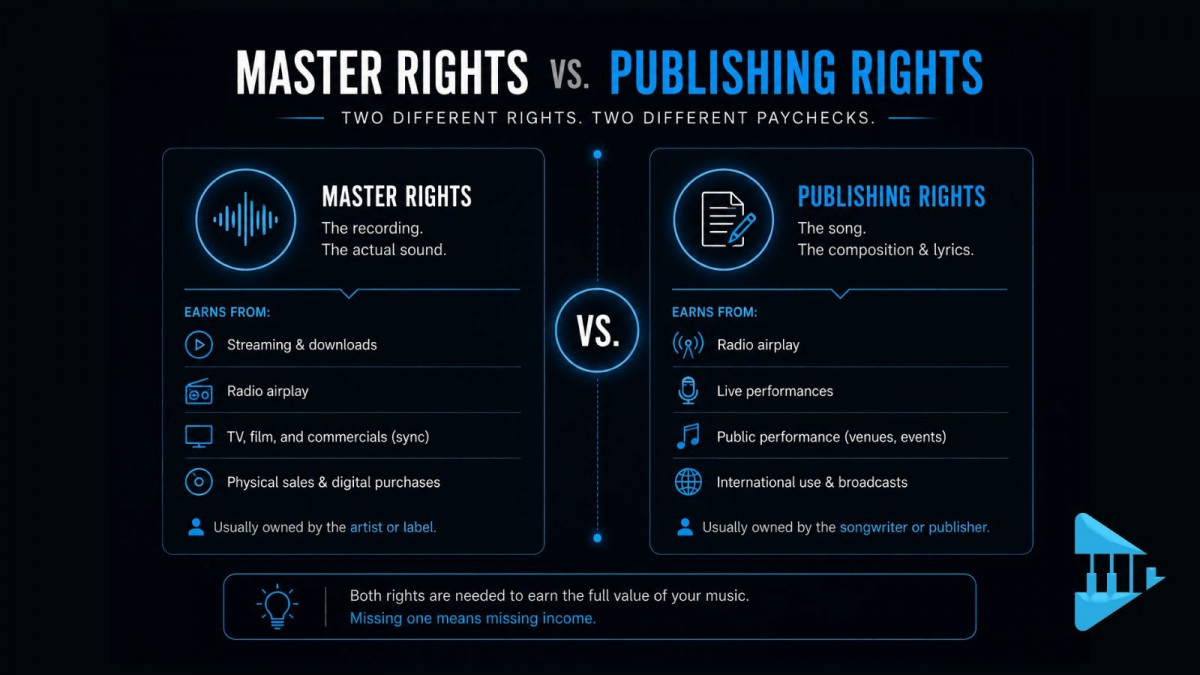
A distributor gets your music onto streaming platforms and collects income connected to the sound recording.
That includes Spotify streams, Apple Music payouts, downloads, and platform income connected to the master recording.
That’s essential, but distribution is not the full royalty system. This is one of the biggest misconceptions in independent music.
Many artists believe uploading through a distributor means every royalty pathway is now connected automatically. Usually, it only covers one part of the picture.
If you’re still comparing options, this breakdown of independent music distribution companies explains what different distributors actually handle and where their limitations begin.
Step 2: Register Your Songs for Publishing
Publishing royalties are connected to the songwriting itself; this income exists separately from the recording.
That means even if your distributor is collecting streaming income properly, publishing income can still remain disconnected.
This is where many artists unintentionally leave money behind.
Publishing royalties can include:
- Performance royalties
- Mechanical royalties
- International collections
- Licensing-related publishing income
If songs are not registered correctly, those royalties become difficult to trace back to the writer.
That does not always mean the money disappears immediately.
But it often means:
- Delayed payments
- Unmatched royalties
- Incomplete collections
- Fragmented income visibility
Step 3: Join the Relevant Collection Systems
This is where the royalty system becomes less visible to most artists.
Different organisations collect different rights.
| System | What It Collects |
| Distributor | Master royalties |
| PRO | Performance royalties |
| Publishing administrator | Publishing/mechanical income |
| Collection societies | International royalties |
| Content ID systems | User-generated content income |
For many artists, the problem is not that royalties do not exist.
The problem is that nobody has a confirmed pathway to pay them. This is especially common once music starts generating international activity.
Organisations connected through CISAC coordinate collections across territories, which is why global music income often takes longer to process and reconcile.
Step 4: Make Sure Your Metadata Matches Everywhere
Metadata sounds technical, but the concept is simple.
Your music needs consistent identity information across every platform and collection system.
That includes:
- Artist name
- Track titles
- Songwriter credits
- Release details
- Ownership information
If those details vary across systems, payments can become difficult to match correctly. This is one of the quieter problems in music royalties because nothing visibly breaks.
The track still streams. The income just becomes harder to connect cleanly back to you.
Step 5: Agree Splits Before Release
Collaboration without documented ownership creates problems later.
Collaboration problems usually don’t show up at the start. They show up later, once money finally starts moving.
That’s why split agreements matter. If ownership percentages are unclear:
- Royalties may be delayed
- Payments can become disputed
- Collection systems may freeze distributions
- Publishing claims can conflict internationally
Most artists only realise this once money finally starts arriving.
By then, sorting it out becomes slower and more stressful than it needed to be.
Why Your Streams and Income Don’t Match
This is one of the most searched frustrations in music royalties.
You see:
- Growing streams
- Audience engagement
- Playlist activity
Then the payout arrives and feels disconnected from what you expected. That disconnect happens because streaming income is only one layer of the system.
- Publishing royalties often arrive later
- Performance royalties follow different schedules
- International collections can take months
- Different systems report at different times.
So artists compare live platform visibility against incomplete royalty snapshots and those are not the same thing.
Why Some Songs Earn More Than Others
Take two songs with similar streaming numbers.
The first track:
- was distributed properly
- but publishing was never registered
- metadata is inconsistent
- no split agreement exists
The second track:
- has publishing connected
- metadata aligned
- splits documented
- international collections linked
The audience may be similar and the music may perform similarly. But the infrastructure behind the songs is completely different.
That difference often determines how much income actually reaches the artist.
How Do You Know If You’re Missing Music Royalties?
This is where things become difficult for independent artists.
Royalty payments do not arrive:
- In one dashboard
- On one schedule
- From one source
They arrive from different systems over time.
That fragmentation makes it difficult to know whether your setup is complete.
A useful self-check is asking:
- Are you only receiving money from your distributor?
- Are your songs registered properly for publishing?
- Can you clearly see where each payment comes from?
- Are your collaborators documented properly?
- Do your metadata records match everywhere?
If the answer to several of those is unclear, there’s a strong chance some royalty pathways are incomplete.
Why Music Royalties Sometimes Take So Long
One of the biggest misconceptions in music is assuming royalties move in real time, most do not.
Different systems:
- Process usage differently
- Report on different schedules
- Reconcile data at different times
- Operate across different countries
International collections are especially slow because multiple societies and reporting layers are involved.
That means a song can appear successful publicly long before all associated royalties fully process. This delay creates a lot of unnecessary panic for artists who assume “streams today should equal money tomorrow.”
That is rarely how royalty infrastructure works.
Checklist: Are You Fully Set Up to Get Paid?
| Setup Task | Why It Matters |
| Release through distributor | Collects master royalties |
| Register publishing | Connects songwriting income |
| Join a PRO | Collects performance royalties |
| Align metadata | Prevents mismatched payments |
| Document splits | Prevents disputes and delays |
| Connect international collections | Captures overseas income |
| Track payment sources | Helps identify missing royalties |
The Real Problem Isn’t Usually the Music
Most independent artists assume the problem is low streams, platform payouts and bad algorithms.
Sometimes it is, but often the bigger issue is fragmented setup.
The music may already be generating more activity than the artist can actually see financially.
That’s why royalty education matters.
Once you understand how the infrastructure works, the industry starts feeling less random.
You stop relying on one platform to handle everything. You stop guessing where money might be missing. You begin seeing the system clearly enough to fix gaps before they compound.
Related Guides for Independent Artists
If you want to build a more complete music income system, these guides connect directly to the setup explained above:
Understanding payouts and royalty reports
Royalty Statement for Music Artists Breakdown
Comparing music distributors properly
Independent Music Distribution Companies
Building multiple music income streams
How to Make Money From Music Online
Understanding music catalogue ownership
Tracking royalties and music income more clearly
Music Royalty Platform for Independent Artists
Frequently Asked Questions About Getting Paid for Your Music
How do artists get paid after releasing music?
Artists get paid through multiple royalty systems. Distributors collect recording income, while publishing royalties, performance royalties, and international collections move through separate organisations and collection pathways.
Does a distributor collect all music royalties?
No. Most distributors collect royalties connected to the master recording only. Publishing royalties, performance royalties, and some international income are usually handled separately.
Why is my music making streams but not much money?
Streaming payouts represent only one part of music income. If publishing registration, metadata, collection systems, or royalty tracking are incomplete, some income may not be reaching you properly.
How long do music royalties take to arrive?
Different royalties follow different reporting schedules. Some payments arrive monthly, while international and publishing royalties can take significantly longer depending on the territory and collection systems involved.
Final Thought
Most artists do not need more complexity; they need clarity.
Once the royalty system is connected properly, things become easier to understand. You stop treating music income like a mystery and start seeing it as infrastructure.
Because independent artists should not have to become legal experts just to understand where their money went.
The goal isn’t to turn artists into royalty experts. It’s to make sure the music you already released has a proper system behind it, so the income attached to your work actually has a way of finding you.