
Quick answer
Starting a career in music today involves far more than writing songs. Artists are responsible for finishing music properly, organising files, managing admin and rights information, and presenting their work clearly to opportunities. Most people feel overwhelmed because they’re told what to do next, but not how the whole system fits together.
How to Start a Career in Music (Without Getting Overwhelmed)
No one really explains how much of a music career happens outside of actually making music.
You start out writing songs. Somewhere along the way you’re also dealing with uploads, files, emails, logins, and things not working the way you expected. It builds quietly. Most days you’re just trying to keep up with it.
If it feels messier than you thought it would, that’s normal.
Why starting a music career feels confusing now
There isn’t one clear path anymore.
What used to sit with labels, managers, or teams now lands on the artist. The work didn’t disappear. It just became your responsibility. Creation, admin, organisation, promotion, and follow-up all sit side by side, whether you’re ready for them or not.
Most artists start without realising this shift has happened. You’re told to release music, stay consistent, and build momentum. What rarely gets explained is how many moving parts sit underneath those instructions, or how easily they start pulling in different directions.
That’s why starting a career in music often feels confusing, even when you’re doing what you’re supposed to be doing.
Writing music is no longer the whole job
Making music is still the centre of everything.
What’s changed is what happens after the song exists. A track needs to be finished properly, stored somewhere sensible, and labelled clearly so other people understand what it is. If that groundwork is missing, the music doesn’t stop being good. It just becomes harder to use.
This is usually the point where things start to feel heavier.
Many artists stall here without realising it. The creative work is done, but the music isn’t ready to move.
The work artists don’t realise they’re doing
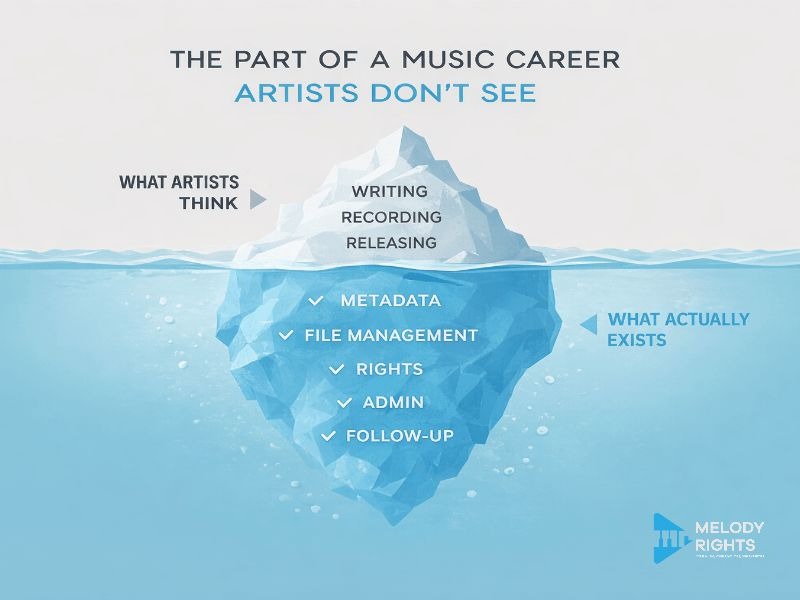
At some point, most DIY artists realise they’ve taken on a second job.
They’re exporting versions, fixing metadata, renaming files, resending links, and answering emails that never seem to end. This kind of admin is rarely mentioned when people talk about how to start a career in music, but it quietly shapes which opportunities appear and which never do.
Zac from the band The New Men described this gap clearly while reflecting on their early releases. The band was progressing musically, but had little understanding of how royalties worked or how many income streams they weren’t set up to collect yet. Progress was visible on the surface, while the foundations underneath were incomplete.
This isn’t about effort or intelligence. It’s about never being shown how the background work fits together.
How Zac and The New Men fixed the royalty mess behind their releases
Why adding “one more platform” feels necessary
When something doesn’t work, the instinct is to fix it quickly.
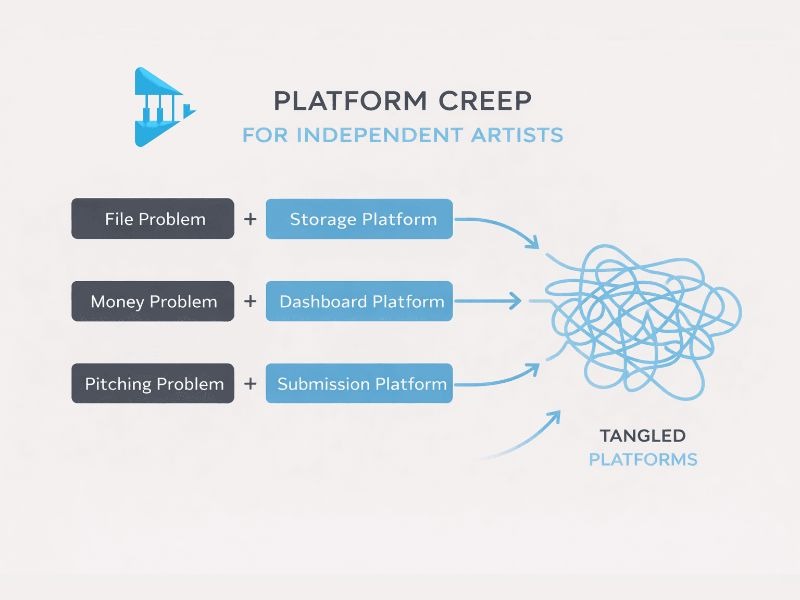
If files feel messy, you look for better storage. If pitching feels awkward, you sign up for another service. If money feels unclear, you add another dashboard. This is how most artists end up using multiple platforms for musicians, each handling one small part of the career.
Each platform solves a real problem. The issue is that they rarely connect. Over time, the work shifts from building a career to managing tools for musicians that don’t talk to each other.
This is how people end up overwhelmed by too many music platforms without ever making a wrong decision.
Being busy doesn’t always mean you’re moving forward
A lot of musicians are constantly active.
Uploading, posting, sending links, fixing small issues, chasing replies. The days fill up quickly. The problem is that activity doesn’t always equal progress when the work is disconnected.
That’s where frustration creeps in. Not because the workload is impossible, but because it’s unclear which tasks actually move the career forward.
How music actually moves from creation to opportunity
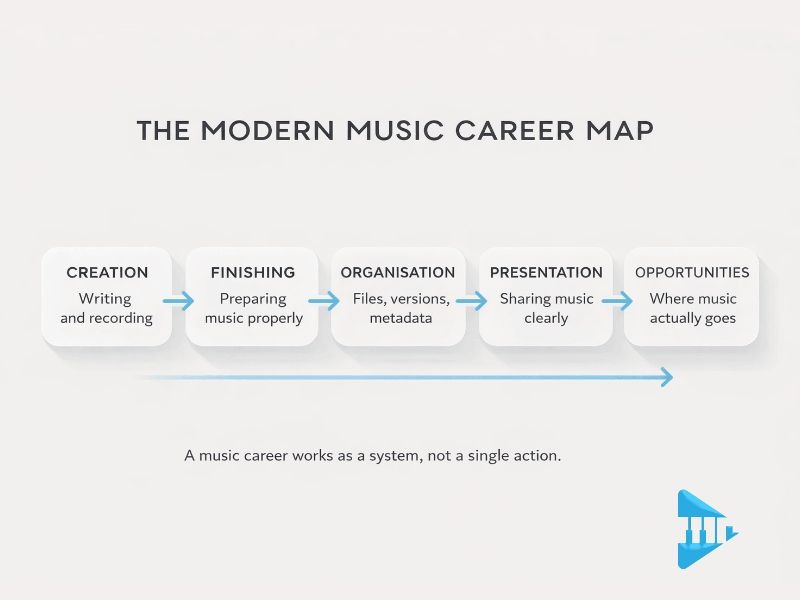
For music to lead anywhere, it moves through a simple flow.
It gets created. It gets finished. It gets organised. It gets presented. Then it reaches people who can actually do something with it. That flow exists whether anyone explains it or not.
When one part of that chain is weak, opportunities don’t usually fail loudly. They just never arrive.
Understanding this system matters more than knowing what tools musicians use at any given moment.
Why streaming isn’t the system holding your career together
Streaming platforms are useful, but they aren’t designed to run a career.
They play music. They don’t organise catalogues, manage rights information, or explain how money flows behind the scenes. When streaming becomes the centre of every decision, important groundwork often gets ignored.
Industry research backs this up. A recent MIDiA Research report shows that the independent music world has become more fragmented, with more platforms competing for artists’ time without making things any simpler.
Streaming is an output. It isn’t the system underneath.
What clarity looks like at the beginning of a music career
Clarity doesn’t mean having everything figured out.
It means understanding what jobs exist in a modern music career, which ones matter right now, and how they connect. When that becomes clear, decisions feel calmer. Tools stop feeling compulsory.
This is often the moment artists move from reacting to platforms to choosing them intentionally.
Start with understanding the system, not collecting tools
If you’re starting out, or already feeling buried, the answer is rarely another signup.
Most artists don’t need more apps or subscriptions. They need a clearer picture of how a music career is structured and where their energy is best spent.
If you already feel weighed down by platforms, the next question isn’t what to add, but what changes once platforms enter the picture.
Platforms for Musicians
If money questions are already creeping in, it also helps to understand how income fits into the bigger picture rather than chasing it blindly.
How to make money as an independent artist
FAQ
What does starting a career in music actually involve today?
Starting a music career now involves more than making songs. Artists are responsible for finishing music properly, organising it, managing rights information, presenting it professionally, and connecting it to real opportunities. Understanding how those pieces fit together matters more than choosing specific tools early on.
What tools do independent artists actually need at the beginning?
At the start, artists need tools that help them prepare music, keep it organised, manage basic rights information, and share their work clearly. The mistake is collecting tools before understanding what job each one is meant to do.
What are music career pathways, and why do they feel unclear?
Music career pathways used to be shaped by labels and teams. Today, artists build them themselves, often without a clear map. That’s why many musicians feel busy but unsure whether they’re moving forward.
Why does starting a music career feel overwhelming so quickly?
It feels overwhelming because responsibility arrives faster than understanding. Most artists are told what to do next, but not how the whole system works, which makes even simple decisions feel heavier than they should.
What should artists focus on before worrying about growth or income?
Before thinking about scale or income, artists benefit most from understanding how their music moves from creation to opportunity. When that structure is clear, later decisions become easier and more intentional.