
Quick answer:
How much does an album cost? A full album can cost anywhere from £0 to £30,000 depending on recording approach, mixing and mastering needs, session musicians, artwork, distribution and promotion. Most DIY artists fall between £1,800 and £8,000 for a release-ready album.
How Much Does an Album Cost?
Most artists feel a quiet pressure when they think about making an album.
They want it to sound real, honest, something they can stand behind. But they have no idea whether the budget should be a few hundred pounds or something far bigger.
Some artists record everything at home and spend nothing. Others convince themselves they need a studio, an engineer and a small army before they can say the word album.
Both paths work.
Both paths break people.
The difference is knowing why you’re doing it and what you actually need.
This guide gives you clarity without judgement.
Real numbers. Real examples. The emotional reality of making a record at different levels.
Why Album Costs Seem So Confusing
Albums aren’t fixed-price items. They’re not a guitar you can buy or a plug-in you can download in seconds.
They’re a pile of decisions made over weeks and months.
Where you record.
Who helps you.
How much of the work you’re willing to take on yourself.
What kind of record you want this to become.
The range is huge
In the UK, albums are made for anything from nothing to the mid-twenties depending on the setup.
In the U.S., most independent projects sit somewhere in the low-thousands to mid-thousands.
It’s messy because the goals are different.
Some are experiments.
Some are statements.
Some are stepping stones.
Most artists land somewhere in the middle. Enough support to lift the record. Not enough to sink the ship.
How Much Does an Album Cost?
Looking across real budget breakdowns and typical freelance rates:
- Most DIY albums in the UK fall between £1,800 and £8,000.
- U.S. equivalents often sit between $2,200 and $12,000.
The higher-end budgets (£10,000 to £30,000+) are usually intentional.
They’re artistic decisions, not requirements.
This guide helps you understand where you sit, so your budget reflects your intention rather than fear or guesswork.
What Shapes the Cost of an Album
Recording choices
Some people thrive alone with a microphone and a laptop.
Others need a room with energy and an engineer who knows when a take is honest.
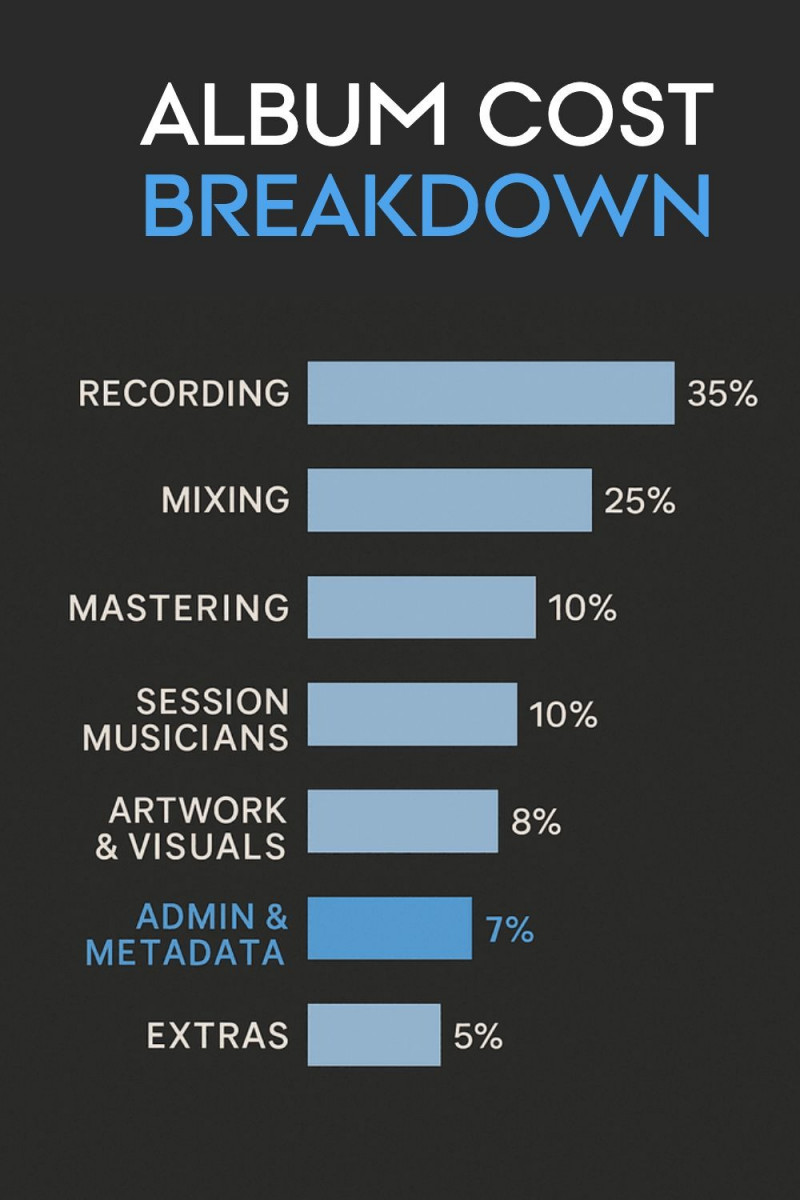
Studio rates in the UK often fall between £25 and £100 per hour, depending on the space and engineer (Arcus Sounds.)
Bobby Cole puts it simply:
“Studio time can often be the biggest expense of producing an album. I would always encourage artists to learn as much as they can about the basic tracking and recording of instruments. It’s not difficult, and it can save you thousands.”
Mixing and Mastering
Mixing is where individual songs grow into a real record.
Dense arrangements need more time than simple ones.
Most freelance mixers charge anywhere from a couple of hundred to the mid-hundreds per track, which lines up with what artists share on Twine.
Mastering keeps everything consistent across the album.
A full mastering breakdown is available here:
How Much Does it Cost to Master a Song.
Session musicians
Sometimes a song needs someone else’s touch. A drummer with feel. A guitarist who understands emotion better than theory.
As Bobby says:
“Working with musicians you might not normally work with stretches you and elevates your album. Everyone brings their own feel. It adds something you couldn’t get on your own.”
– Bobby Cole
Artwork, file prep and admin
This is the part people underestimate.
Artwork, file naming, metadata, distribution, release planning.
Most distributors don’t cover everything.
Missed metadata is one of the biggest reasons royalties never reach the right person.
You can see those gaps clearly here: How To Register My Music.
Melody Rights sits in this space – the final step that stops small admin errors turning into missing income later.
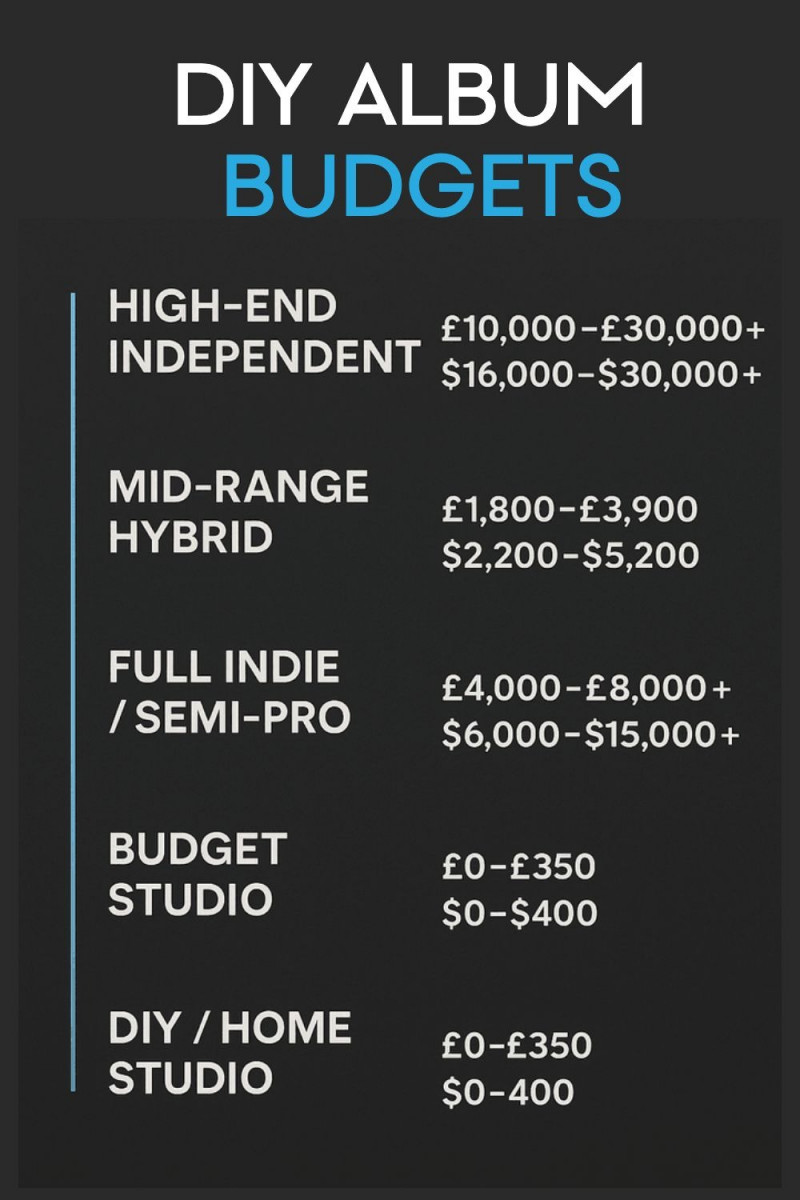
Album Budget Tiers
Here is the simplest view of how album budgets fall in the real world.
Not rules, patterns.
| Tier | UK/EU Cost | U.S. Cost | What You’re Paying For | What You’re Skipping | Best For |
| DIY / Home-Studio | £0 – £350 | $0 – $400 | Self-recording, existing gear, one master if needed | Studio rooms, engineers, players, visuals, promo | First albums and artists exploring their voice |
| Budget Studio / Local | £500 – £1,800 | $600 – $2,200 | A few days in a small studio, basic engineering, simple mastering | Heavy mixing, complex production, session players | Bands wanting a clean recording without big cost |
| Mid-Range Hybrid | £1,800 – £3,900 | $2,200 – $5,200 | Studio for essentials, overdubs at home, proper mixing, bundled mastering | Large promo, vinyl, big production teams | Most DIY albums today |
| Full Indie / Semi-Pro | £4,000 – £8,000+ | $6,000 – $15,000+ | Multiple studio days, respected mixing, full mastering, players, artwork, early promo | Full PR, tour funding, label-level campaigns | Artists building momentum |
| High-End Independent | £10,000 – £30,000+ | $16,000 – $30,000+ | Full production cycle, top mixers, musicians, visuals, vinyl, PR push | Major-label marketing | Career-defining albums |
Real Album Budgets From Real Artists
Spencer’s DIY story
One of the most grounding examples comes from Spencer, who shared his experience openly during our conversation.
“I made most of that album on borrowed gear in a tiny room. At some point I realised the limitation was helping me. It forced me to decide what really mattered in the songs.”
– Spencer, Melody Rights interview
This belongs at the heart of the DIY tier.
The mid-range hybrid record
Hard Stop Records share real budgets from independent artists.
Most fall in the low-to-mid thousands, right in the £1,800–£3,900 UK and $2,200–$5,200 U.S. range.
These are the bands who track essentials in a studio, finish overdubs at home, and hire a mixer to tie everything together.
The fully produced independent album
Brenda published one of the clearest album budgets online. Real numbers, no fluff.
- $16,520 on studio time and musicians
- Around $25,000 total once mixing, mastering, artwork and promo were included
It wasn’t excess. It was intention, a record she wanted to stand beside for years.
The Hidden Costs Artists Forget
Three groups tend to creep up quietly.
1. Extra Audio Work
- Alternate versions
- One more vocal take
- Reference mixes
- Pre-production sessions
This is where “just give me five minutes” becomes half a day.
2. Practical and Logistical Costs
- Travel to studios
- Session player travel
- Storage drives
- File transfers
Not glamorous, but they drain a budget quickly.
3. Creative and Administrative Add-Ons
- Artwork revisions
- Metadata corrections
- Vinyl or CD preparation
Tiny tasks that look inexpensive but multiply.
How to Build a Budget That Feels Right
Start with what this album means to you.
A quiet first project has a different heartbeat than a record you want to push toward festivals or sync.
Then ask yourself:
- What parts can I genuinely handle without pushing the music backwards
- Where do I need someone with trained ears
- How should these songs live: digital-only, or something physical
- Do they deserve visuals
- What shape do the songs naturally want to take
- What happens to the album after it leaves my laptop
Bobby’s advice sits at the centre of this:
“Planning your sessions is vital. If you’re organised and know exactly what you’re doing, there’s no reason you can’t record an album’s worth of songs in two days.”
– Bobby Cole
Good planning reduces cost more than anything else.
If you want to understand how music earns after release:
How To Make Money From Music Online
How Budget Shapes Your Future Options
A good mix opens doors.
A clean master reduces technical flags.
Accurate metadata decides whether royalties actually reach you.
It might feel dull, but this is where financial freedom hides.
If sync is part of your plan, this guide helps: Music Licensing for Film and TV
PRS and PPL explain why metadata matters:
FAQs
Can an album cost nothing?
Yes. If you already own the tools, your cost is time and patience.
What is a normal DIY album budget?
Most serious DIY albums land between £1,800 and £8,000.
Does spending more guarantee a better record?
No. Spending wisely matters far more.
Do I need mastering?
If you want your album taken seriously on streaming platforms, yes.
Final Thoughts
Albums are emotional objects, they grow with you.
Spend where the music expands, save where your ego shouts.
If you want the human story behind the numbers, Spencer’s interview is waiting for you.
If you want to make sure your album is registered properly so it can earn, Melody Rights can handle the admin most distributors skip. The part that protects your work long after the session ends.