
You write great songs. You’ve played the gigs, recorded the tracks and built your audience one listener at a time. Yet for a lot of independent artists, whether they’ve been at it for two years or twenty, the money side still feels like a maze, and many have unclaimed music royalties sitting out there without realising it.
That isn’t down to a lack of effort. The way musicians get paid was built up over more than a century, with a different organisation collecting each kind of payment, and it was never designed with independent artists in mind.
In a lot of cases, it’s not that your music isn’t earning; it’s that nobody is collecting what it earns. Melody Rights helps independent artists change that and keep more of what’s theirs. This guide explains what it does, one piece at a time, with every bit of jargon explained as it comes up.
Quick Answer: What Is Melody Rights?
Melody Rights is an online platform that helps independent musicians collect the royalties their music earns. It registers your songs with the organisations that pay musicians and tracks everything in one dashboard. It also offers mastering, private playlist links, cloud storage and sync opportunities. It doesn’t put music on Spotify; it works alongside your distributor.
TL;DR (Key Summary)
- Royalty tracking finds and collects the money your music earns when it’s played, streamed, copied or used in videos.
- Sync gives you a way to put your music forward for films, TV, adverts and games.
- Mastering gives your finished songs that final polish.
- Expiring playlist links let you share your music privately.
- Cloud storage keeps all your music safely backed up in one place.
- Melody Rights doesn’t put your music on Spotify. It looks after everything that happens around and after your release.
Signs You Might Have Money Waiting for You
Run through this quick check. No jargon needed. Have you…
- Played your own songs live?
- Had your music on the radio, even local or student radio?
- Released music through a distributor but never registered it anywhere else?
- Written or co-written songs?
- Played on someone else’s recording?
- Spotted your music in other people’s YouTube or TikTok videos?
- Had your music played in shops, pubs or gyms?
Every yes is a royalty you might not be collecting. If your streams and payouts don’t add up, read why your song isn’t making money yet.
First Things First: What Are “Rights” and “Royalties”?
Music rights are simply ownership. When you write or record a song, you own it, a bit like owning a house. Other people need your permission to use it, and they usually have to pay you when they do.
Royalties are those payments. Think of them like rent: every time someone uses your song (a stream, a radio play, a clip in a YouTube video), a tiny bit of rent is owed back to you.
But that rent doesn’t arrive by itself. It’s collected by different organisations around the world, and it only reaches you if your music is registered with each of them. If it isn’t, the money sits in what the industry calls the “black box” (royalties that can’t be matched to their owner).
In the US alone, The MLC (which collects streaming royalties for songwriters) found $426.9 million in unmatched royalties built up between 2007 and 2020: money earned by songwriters who simply couldn’t be found.
Bobby Cole, founder of Melody Rights, puts it bluntly:
“The industry is perfectly capable of collecting money before it knows who should receive it. That’s backwards… The music industry has become incredibly good at tracking usage and collecting money. It should be equally good at identifying the person who created the music and getting that money back to them.”
Artist Insider Tip
A song has two parts you can own, and each earns its own money: the song itself (the lyrics and melody you wrote, often called the composition) and the recording (the actual audio, often called the master). Read more in our guide on who owns a song.
1. Royalty Tracking: Making Sure You Actually Get Paid
This is the heart of Melody Rights. You upload your music, Melody Rights registers it in the places that collect money for musicians, then keeps an eye on where it’s being used so the money can find its way back to you.
In plain English: it’s like having someone chase every unpaid invoice for your music, all over the world.
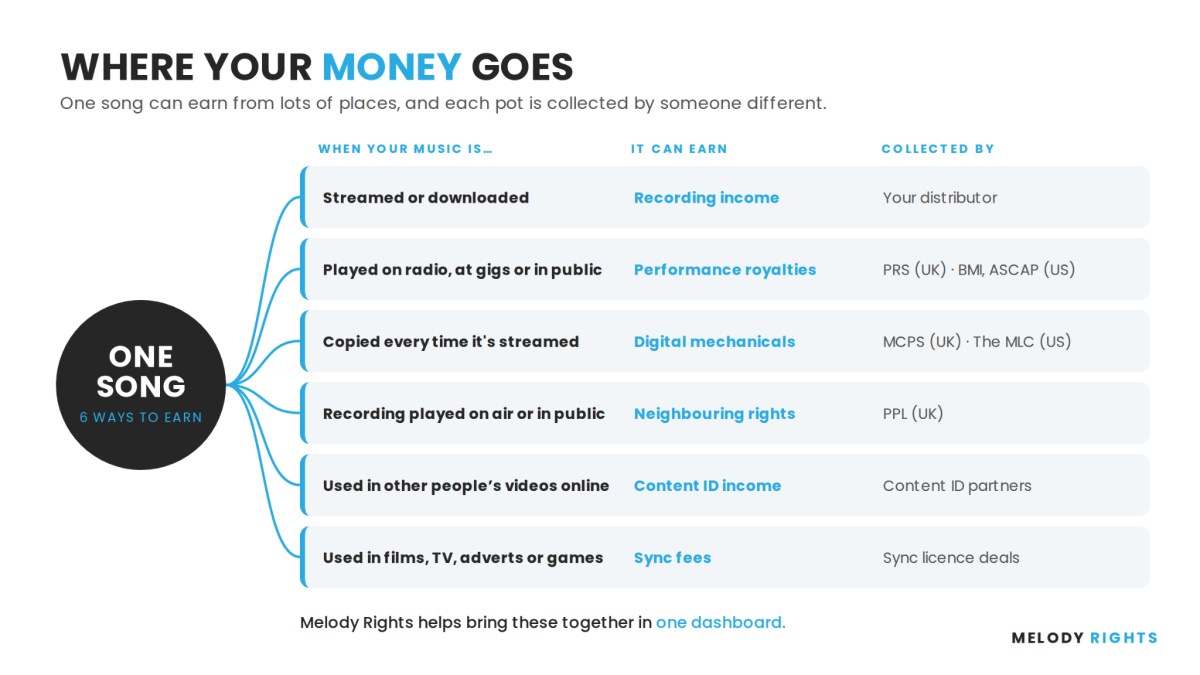
Here are the main types of royalties Melody Rights looks after.
Publishing and writer’s royalties
Money earned by the song itself (the words and melody), rather than the recording. Writer’s royalties are the songwriter’s personal share. A “publisher” is just the person or company whose job is to collect this money.
Performance royalties
Money earned when your song is played in public: radio, TV, gigs, pubs, shops, gyms and streaming. These are collected by PROs (Performing Rights Organisations, like PRS in the UK or BMI in the US).
Mechanicals and digital mechanicals
Money earned when your song is copied, whether pressed onto CDs and vinyl or streamed and downloaded. Digital mechanicals are collected through MCPS in the UK and The MLC in the US, and they’re one of the most commonly missed royalties out there.
Content ID
When a video on a platform like YouTube uses your music, whether for 10 seconds or 5 minutes, an advert can be placed next to it, and you get a share of that advert money. Content ID is the system that spots your music in those videos. If your songs aren’t registered, you’ll never see a penny.
Neighbouring rights
Money earned by the recording, and the people who performed on it, when it’s played on the radio, on TV or in public. In the UK it’s collected by PPL, and you don’t have to have written the song to be owed some. If you played bass on a friend’s single, you could have a share waiting.
Worldwide publishing
Collecting the money your songs earn in other countries, not just your own.
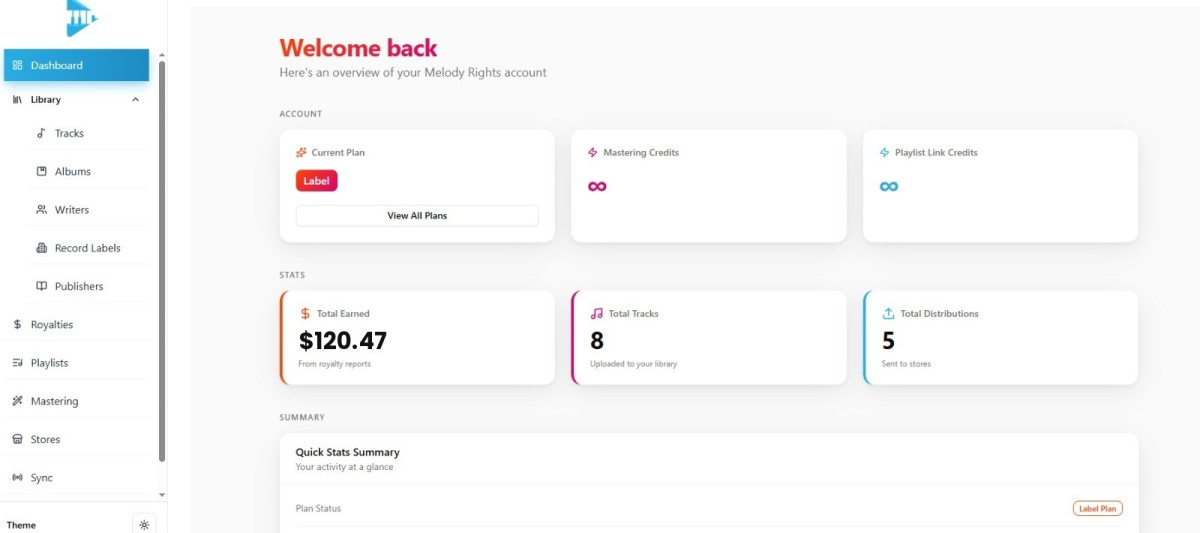
Most musicians assume all of this happens automatically once a song is out. It doesn’t, and that assumption is where most of the missing money comes from. Melody Rights registers each one in the right place and shows you everything in one dashboard.
What this looks like for real artists
Nia, a harpist who uses Melody Rights, said the platform made it easy to collect royalties she didn’t even know existed. The alt-rock band Zac and The New Men had BBC Radio 1 plays and Royal Albert Hall gigs, but their royalties weren’t keeping up. Read their story in our Zac and The New Men case study.
Bobby has seen it on YouTube too. Looking into Content ID income, the Melody Rights team found artists whose music was already being used in other people’s videos and earning money they weren’t connected to. Once their rights were properly matched, that money could finally reach them.
“Unclaimed royalties aren’t always hypothetical. Sometimes the music has already earned the money. The artist simply doesn’t know that the money exists or where to look for it.” – Bobby Cole
Artist Insider Tip
- ISRC is a unique barcode for a recording. Melody Rights gives each of your tracks one.
- Metadata is the information attached to your song (title, writers, performers, owners). Think of it as the address label on a parcel: get it wrong and your money gets lost in the post.
For more detail, read 4 types of music royalties explained or see the royalty tracking page.
Why the sooner you register, the better
Unclaimed money doesn’t wait forever:
- Gig royalties have deadlines. PRS for Music wants setlists from small venues within one year, and from bigger UK or international shows within three. See PRS’s reporting deadlines.
- You usually can’t claim for the past. Under PRS’s terms, new members can’t claim for gigs played before they joined.
- Unmatched money doesn’t sit still. In some systems it’s eventually shared out to other rights holders instead.
Bobby’s advice on where to start is a royalty registration audit (a check of where each song is actually registered). Take one release and check:
- Is the composition (the song you wrote) registered?
- Is the recording registered?
- Are the right people attached, with the right ownership percentages (who owns how much)?
- Does the metadata (like the ISRC and song details) match across every system?
Then repeat it across your catalogue (all the music you’ve released).
“A boring afternoon checking registrations could potentially be worth far more than another afternoon promoting a track.” – Bobby Cole
Our guide on how to get paid for your music after release walks through the full setup.
2. Sync: Getting Your Music Into Films, TV, Adverts and Games
Sync (short for synchronisation) means putting music alongside pictures. Any time you hear a song in a TV show, film, advert, video game or YouTube video, that’s sync.
To use your song, the people making the video need your permission, called a sync licence. In return, you usually get paid a fee upfront, plus performance royalties if it’s broadcast.
With Melody Rights, you can apply directly to sync opportunities from your account, putting your music forward for real projects without needing to know someone who knows someone.
For a lot of independent artists, sync is where the bigger cheques come from. A single placement in an advert or TV show can pay more than thousands of streams, and it introduces your music to a whole new audience.
Artist Insider Tip
Keep an instrumental version (the song without vocals) of each track ready to go. Lots of projects need one, and it can be the difference between being picked or passed over.
Read more about how music gets chosen for sync or visit the sync page.
3. Mastering: The Final Polish on Your Songs
Mastering is the last step before a song is released. Think of it as the final coat of varnish: the song is already built, and mastering makes it shine. It makes your track loud, clear and balanced on any speaker, and makes every song on an EP or album sound like it belongs together.
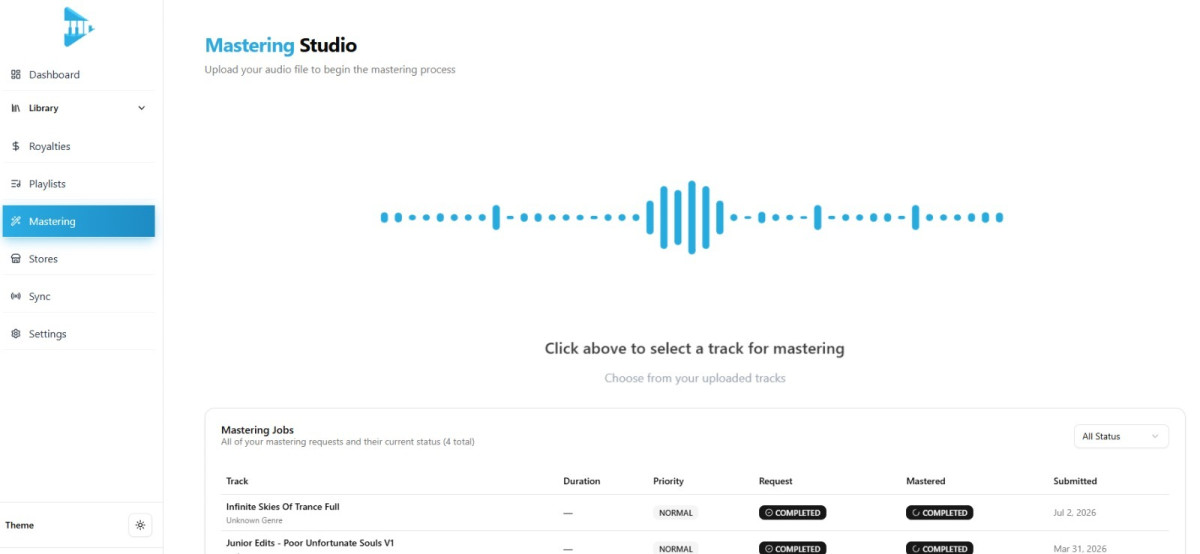
Melody Rights has an online mastering tool built in, so there’s no need to book a studio. You can pick a genre preset (a ready-made setting put together with professional mastering engineers) or fine-tune it yourself.
If your track has ever sounded quieter or flatter than the song before it on a playlist, that’s usually what mastering fixes.
Find out more on the mastering page or in our guide to online mastering for artists.
4. Expiring Playlist Links: Sharing Your Music Privately
Sometimes you want someone to hear your music before the rest of the world does: a producer, a record label, or a music supervisor (the person who picks songs for TV and film).
Instead of emailing big audio files that bounce back or get lost, Melody Rights lets you build a playlist of your tracks and share it with a single link. Whoever you send it to just clicks and listens, on any device.
The link can expire after a set time, so your unreleased music stays under your control, and you can see how many times your playlist has been viewed.
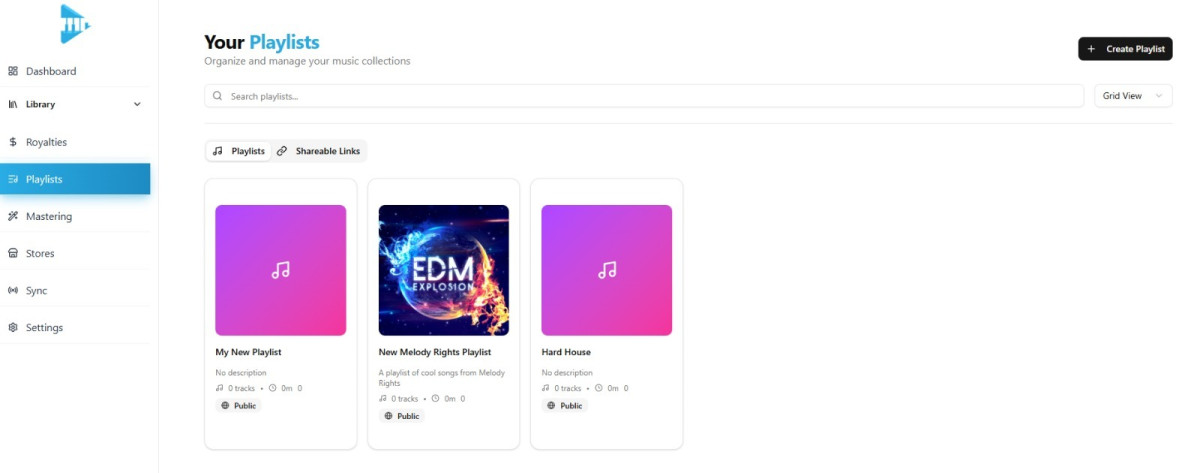
This matters most when you’re pitching (sending your music to someone in the hope they’ll use, sign or play it). A clean, one-click link gives yours a much better chance of being heard.
See how it works on the playlists page.
5. Cloud Storage: One Safe Home for All Your Music
Cloud storage means keeping your files online, not just on a laptop or hard drive, so they’re safe if your computer dies. Instead of songs scattered across old laptops, USB sticks and emails, Melody Rights gives your music one organised home.
- Automatic MP3 copies. Upload a WAV (a full-quality audio file) and you automatically get an MP3 (a smaller version that’s easier to share).
- Song details in one place. Add the record label, publisher and songwriters for each track.
- Everything starts here. Upload once, then register it, master it, share it or put it forward for sync.
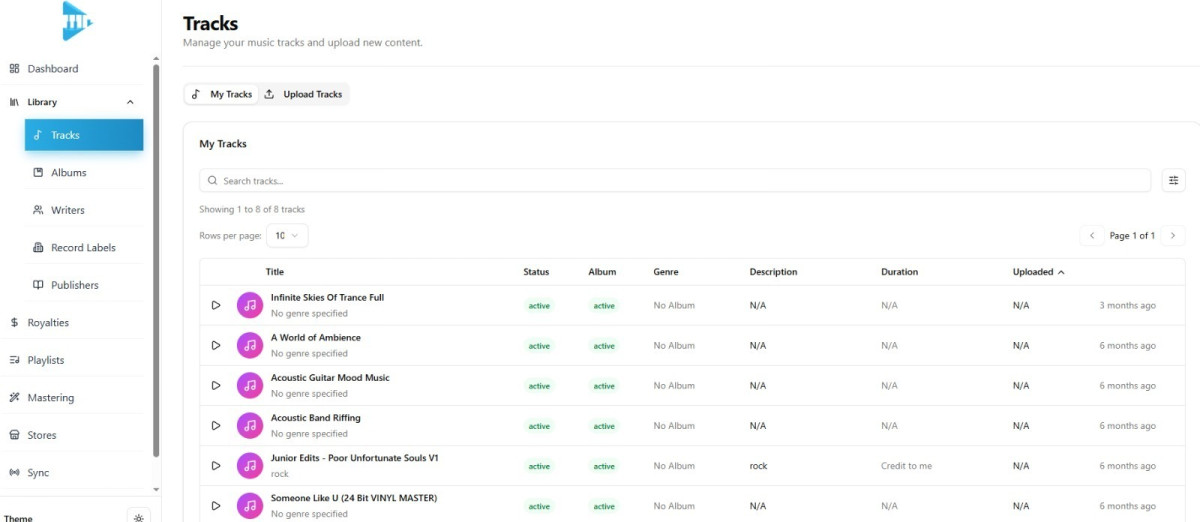
Learn more on the cloud storage page.
What Melody Rights Doesn’t Do
Melody Rights does not put your music on Spotify, Apple Music or other streaming services. That’s the job of a distributor (a company like DistroKid or TuneCore that delivers your songs to streaming services).
A distributor gets your song out there and usually collects some of what the recording earns from streams and downloads. But publishing royalties, digital mechanicals, neighbouring rights and Content ID money are usually collected elsewhere, so they can easily slip through the gaps.
Melody Rights picks up from there.
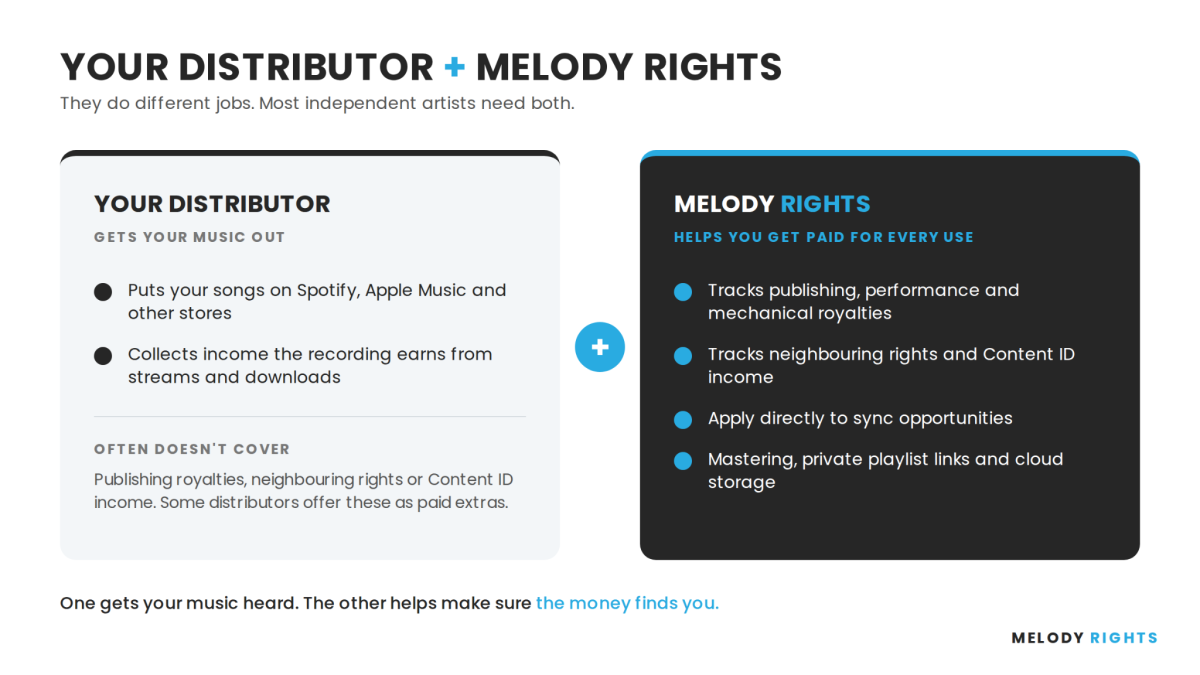
So it isn’t a case of choosing one or the other. Your distributor gets your music onto streaming services; Melody Rights helps make sure you’re paid for every way it’s used.
You might notice a Stores section in your Melody Rights account. It’s separate from royalty collection: it’s where you can send your music to platforms that sell or license it. At the moment that’s Bandcamp, AudioSparx, Pond5, Deposit Photos, ReverbNation and gaming asset packs (bundles of music sold to game developers), with more planned.
Curious how this works in practice? Read do distributors collect publishing royalties?
Who Is Melody Rights For?
Anyone who makes music and wants to get paid properly for it. That could be a bedroom producer about to release a first track, a band with a few EPs behind them, a session player, a songwriter who’s been at it for decades, or a record label.
You don’t need to be just starting out to benefit. Some of the people with the most unclaimed money are the ones who’ve been working hardest for longest, simply because nobody ever explained this side of the industry.
How much does it cost?
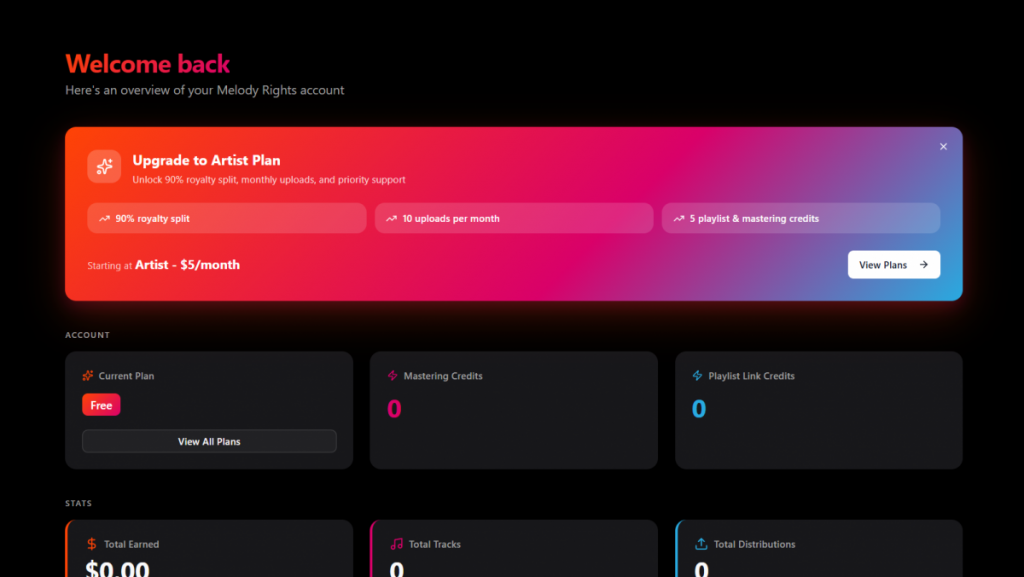
There’s a free plan, where you keep 80% of the royalties collected. Paid plans start from $5 a month, and the higher plans let you keep up to 100% of what you earn and upload more music. Every plan includes all the services in this guide.
We’d rather be upfront about that split. Plenty of musicians have been burned by hidden cuts before. Compare everything on the pricing page.
Jargon Buster: The Cheat Sheet
| Term | What it actually means |
| Royalties | Payments you’re owed when your music gets used, like rent on your song. |
| Black box | Royalty money that couldn’t be matched to its owner. |
| Composition | The song itself: the words and melody you wrote. |
| Master | The actual recording of the song. |
| Publishing royalties | Money the song itself (not the recording) earns for its writers. |
| Performance royalties | Money earned when your song is played in public. |
| PRO | An organisation (like PRS or BMI) that collects performance royalties. |
| Mechanicals | Money earned when your song is copied, on CD, vinyl or by streaming. |
| MCPS | The UK organisation that collects mechanical royalties. |
| The MLC | The US organisation that collects digital mechanicals. |
| Content ID | The system that spots your music in online videos so you share the advert money. |
| Neighbouring rights | Money the recording and its performers earn when it’s played in public. |
| PPL | The UK organisation that collects neighbouring rights. |
| ISRC | A unique barcode that identifies a recording. |
| Metadata | The information attached to your song, like the address label on a parcel. |
| Sync licence | Permission to use your song alongside pictures, usually for a fee. |
| Distributor | A company that puts your music on Spotify, Apple Music and other stores. |
FAQs About Melody Rights
Why am I not getting paid for my music?
Usually it’s because your songs aren’t registered with all the organisations that collect money for musicians. A distributor gets your music onto streaming services, but publishing royalties, performance royalties, neighbouring rights and Content ID money are collected separately. If those registrations are missing, the money has nowhere to go.
How do I know if I have unclaimed music royalties?
If you’ve played gigs, had radio play, released through a distributor, co-written songs or played on other people’s recordings, and you’ve only ever been paid by your distributor, there’s a good chance some royalties are going uncollected.
What is Melody Rights in simple terms?
It’s an online platform that helps musicians get paid for their music, look after it and find new opportunities for it. It tracks your royalties, gives you a way into sync, masters your songs, lets you share music privately and stores everything safely online
Do I need Melody Rights if I already have a distributor?
A distributor gets your music onto streaming services. It usually doesn’t collect every type of royalty your music earns. Melody Rights works alongside your distributor to help pick up the money that often gets missed.
Will Melody Rights put my music on Spotify?
No. Melody Rights doesn’t send music to Spotify, Apple Music or other streaming services. You’ll still need a distributor for that.
I’ve been making music for years. Is it too late?
Not at all. Lots of experienced musicians are owed royalties they’ve never collected, and registering your older songs now helps future earnings reach you. Some past income can’t be claimed retrospectively, which is why it’s worth getting set up as soon as you can.
Do I need to understand all the jargon to use it?
No. Melody Rights handles the complicated registration side, so you can focus on making music.
Is there a free option?
Yes. The free plan lets you get started and keep 80% of the royalties collected. Paid plans start from $5 a month and let you upload more and keep up to 100% of what you earn.
The Bottom Line
You’ve already done the hard part. You wrote the songs, recorded them, played them live and put them out into the world. Underneath all the jargon, the idea is simple: you made the music, so you should be paid every time it’s used.
You don’t need to know what a digital mechanical is to benefit from one. You just need to make sure someone is collecting it for you.
Sign up for free and see what your music could be earning.
About the author: Emma Gibson is a content writer who has written over 50 guides for Melody Rights, covering music royalties, sync licensing, distribution and building a career as an independent musician.
Reviewed by Bobby Cole, founder of Melody Rights. Bobby is a composer, producer and music rights strategist with over 25 years of experience in sync licensing, publishing, royalty systems and independent artist development.