
Production Music Libraries Explained: How They Work (And How They Fit Into Sync)
Production music libraries are one of the main ways music gets licensed in film, TV, advertising, and games, but they’re often misunderstood.
Some artists treat them like opportunity lists. Others see them as gatekeepers. Both views miss how the system actually works.
They organise music so it can be found, cleared, and licensed quickly when someone needs it, usually under tight deadlines and real constraints.
If you’ve ever wondered what production music libraries actually do, how they make money, or what you’re really agreeing to when you sign a deal, this breaks it down in plain English.
If you’re trying to understand where sync opportunities come from before they reach libraries, start here:
https://melodyrights.com/music-sync-opportunities-the-real-pipeline
This page stays focused on what happens inside the library system. How music is organised, how it gets licensed, and how money flows once your tracks are in.
Production music libraries are systems that organise, license, and clear music so it can be used quickly in film, TV, advertising, and games.
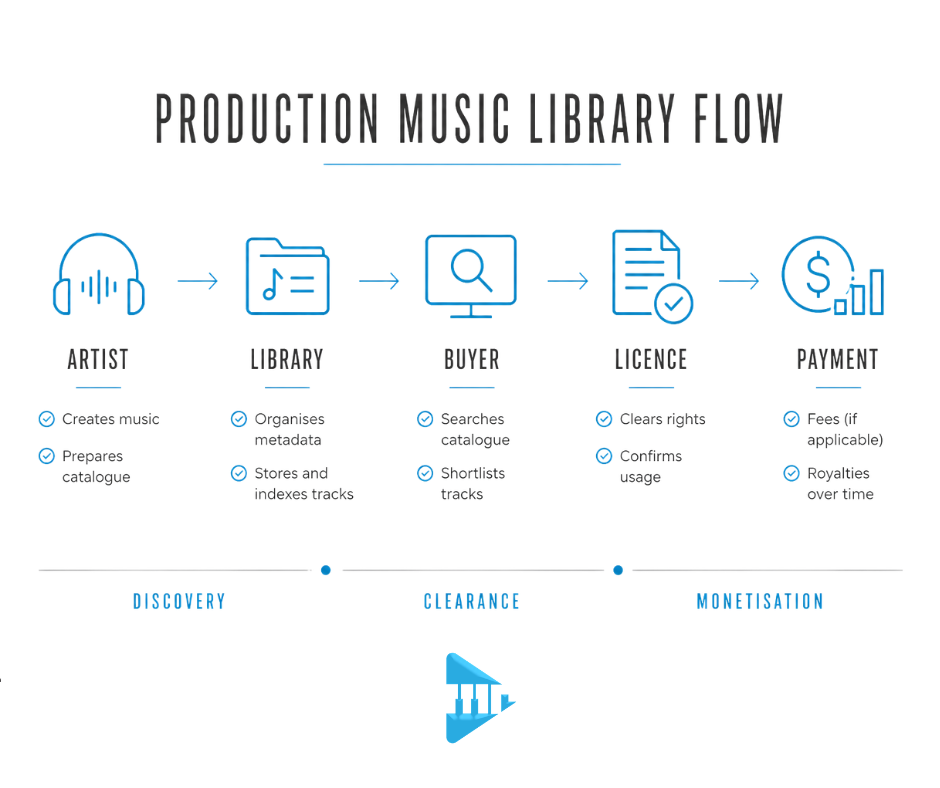
What is a production music library?
A production music library is a catalogue of music that’s ready to be licensed for things like TV, film, ads, trailers, and games.
A more useful way to think about it is this: it’s a system that helps people find music fast and use it without things getting complicated on the rights side.
Instead of negotiating every track from scratch, libraries hold music that’s already set up for licensing. It’s tagged properly, organised in a way that makes sense to buyers, and structured so it can be cleared without delays.
If you’ve never thought about your music as a catalogue rather than just individual tracks, this is worth understanding:
https://melodyrights.com/what-is-a-music-catalogue
If you want a neutral industry reference point, the PRS for Music overview is a solid place to start.
Libraries are not just about having good music, they’re about making that music easy to use under pressure.
Production music libraries are not all the same
One of the biggest mistakes artists make is treating all libraries like they work the same way.
There are a few different models, and what you’re agreeing to depends on which one you’re dealing with.
Curated exclusive libraries
Your track lives in one place. The library has more control over how it’s pitched and used.
Non-exclusive libraries
The same track can exist in multiple places. More reach, but more chance of overlap or conflict.
Subscription libraries
Buyers pay a monthly or annual fee for access to a catalogue. This is common for online content and creator use.
Marketplaces
Open platforms where artists upload music and buyers browse. Less curation, more volume.
Catalog management platforms
Not libraries in the traditional sense. These help you organise, manage, and track your music and its data across different systems.
If you don’t understand which model you’re in, it’s easy to agree to terms that don’t match what you think you’re doing.
Quick comparison of library models
| Model | What it is | How it makes money | What it means for you |
| Exclusive library | One home for your track | Sync fees + backend | Less flexibility, more control from the library |
| Non-exclusive | Same track in multiple places | Volume + commission splits | More reach, but possible conflicts |
| Subscription | Access via monthly or annual fee | Recurring revenue | Lower value per use, higher volume |
| Marketplace | Open upload platform | Commission per sale | Easy access, less curation |
| Catalog platform | You manage your catalogue, rights, and metadata | Not a licensing library | More control, more responsibility |
This is how the main production music library models compare:
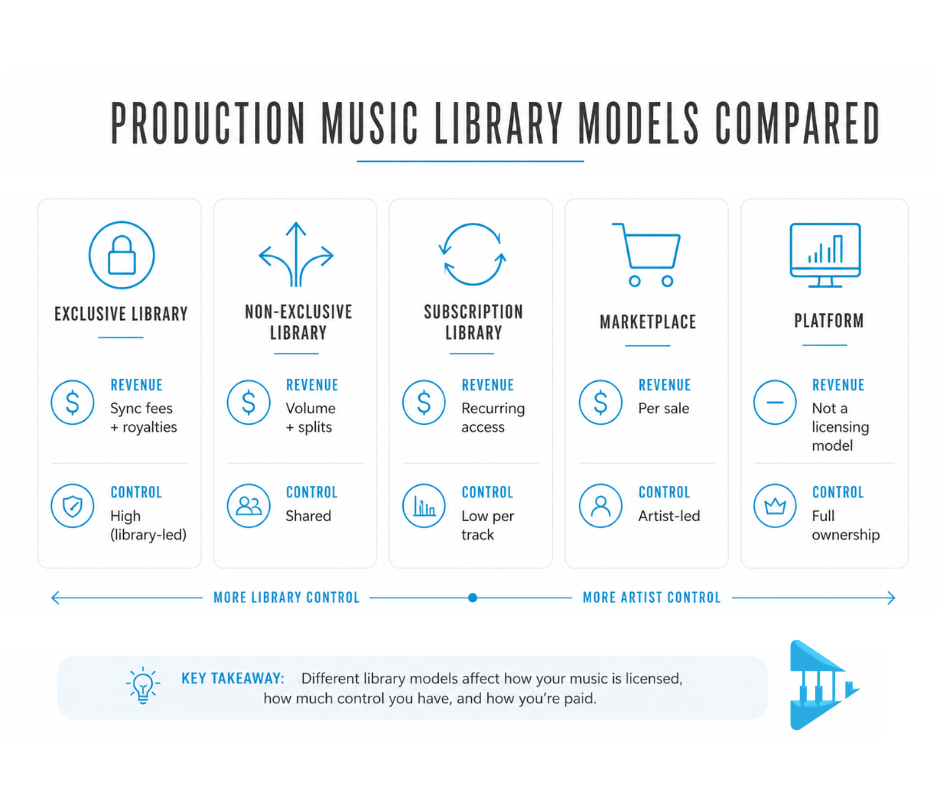
These are the main library models your music may interact with. Melody Rights doesn’t sit inside one of these models, it supports your catalogue across them.
Production music vs artist-released music
Not all sync music comes from libraries, but libraries solve a specific problem.
If someone wants to license a commercial release, there can be multiple people involved. Labels, publishers, co-writers. That means more approvals, more emails, and more chances for something to slow down.
Production music is usually set up to avoid that. Fewer moving parts, clearer rights, faster decisions.
That’s why libraries get used a lot when deadlines are tight, edits are still changing, and nobody wants a clearance issue at the last minute.
When decisions are being made quickly, this becomes important:
https://melodyrights.com/the-hidden-truth-about-how-music-gets-chosen
Production music vs “royalty-free” music
You’ll see some overlap between production music libraries and what people call “royalty-free” music, but they’re not exactly the same thing.
Libraries can work across different licensing models. Some are custom, some are blanket deals, some are per-use.
Royalty-free is usually a simplified licence where someone pays once and uses the track within certain limits.
If you want the full breakdown of what that actually means and where people get caught out, read:
https://melodyrights.com/what-does-royalty-free-mean-the-honest-truth
Where libraries sit in the sync world
Production music libraries don’t create demand, they respond to it.
They sit between the people who need music and the people who make it.
Their job is to make sure that when someone is looking for a track, they can find it quickly, understand what it does, and clear it without friction.
That’s why the system leans toward music that is organised, predictable, and easy to work with. Not just “good,” but usable.
If you want a broader view of how music is licensed across film, TV, and commercial use, this is a good place to start:
https://melodyrights.com/music-licensing-for-film-and-tv
Why production music libraries are still used
From the outside, it can feel like everything should be open and direct.
In reality, libraries still exist for a reason.
They make things easier for buyers. They reduce the time it takes to find music, make licensing more predictable, lower the risk of clearance problems, and simplify admin when projects are moving fast.
When deadlines are tight, people don’t want more options. They want something that works and can be cleared without delays.
How production music libraries make money
Libraries don’t all make money the same way, but most of them use a mix of these models.
Sync fees (per use)
A one-off fee paid when a track is licensed for a specific project.
Blanket licences
Broad agreements where a company pays for access to a catalogue over a period of time.
Subscription models
Ongoing access for creators, usually at a fixed monthly or annual cost.
Commission splits
The library takes a percentage of the revenue generated from your track.
The exact mix depends on the type of library and the clients they serve.
How briefs and searches work inside libraries
Once music is inside a library, it needs to be easy to find.
That’s where search and internal systems come in.
Tracks are organised using metadata like mood, genre, tempo, instrumentation, and energy.
Libraries build playlists, collections, and internal shortlists based on this.
Over time, trust also plays a role. Tracks from artists who consistently deliver usable, well-prepared music are more likely to be surfaced and pitched.
If you want the bigger picture of how briefs move before they reach libraries, read:
https://melodyrights.com/music-sync-opportunities-the-real-pipeline
What libraries want from composers and artists
At a basic level, libraries want music that is easy to use.
That usually means clear ownership and agreed splits, one-stop where possible, clean versions, consistent metadata, and fast, professional delivery.
If you want the full checklist of what “sync-ready” actually means, start here:
https://melodyrights.com/music-licensing-for-film-and-tv
Metadata is doing more work than you think
Most artists treat metadata like a boring admin task.
Inside a library, it’s doing three important jobs at the same time.
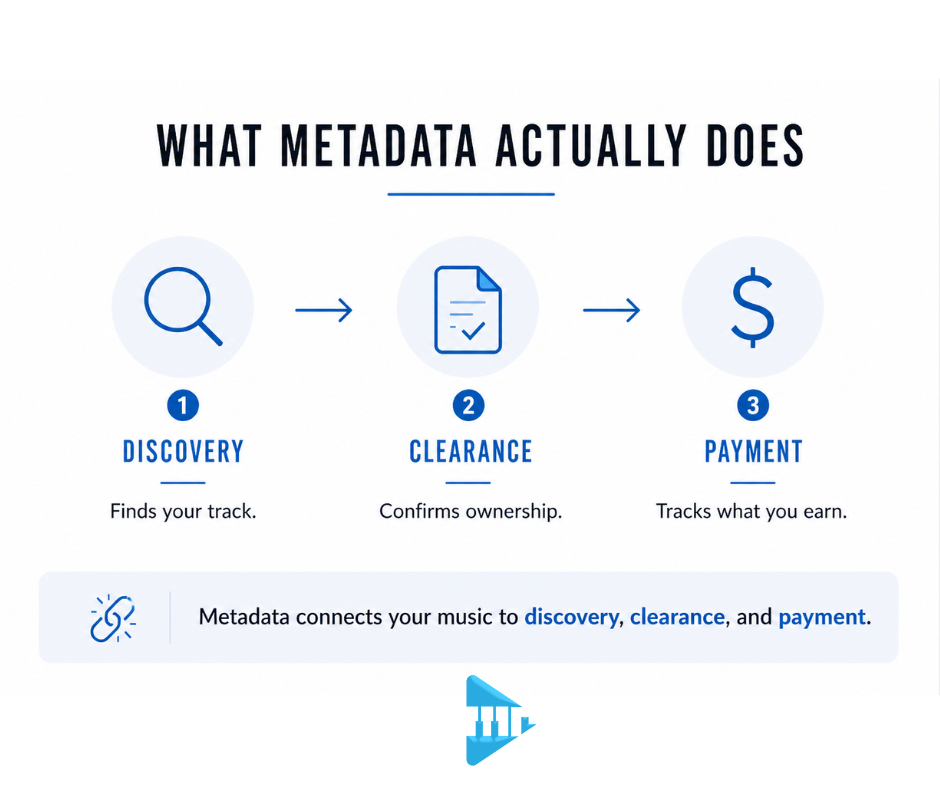
It helps your track get found, cleared, and paid.
Search depends on it. Clearance depends on it. Reporting depends on it.
If your metadata is messy or inconsistent, your music becomes harder to use, even if it sounds great.
How money actually flows in production music
The money side of libraries is often explained in a vague way. This is what it actually looks like.
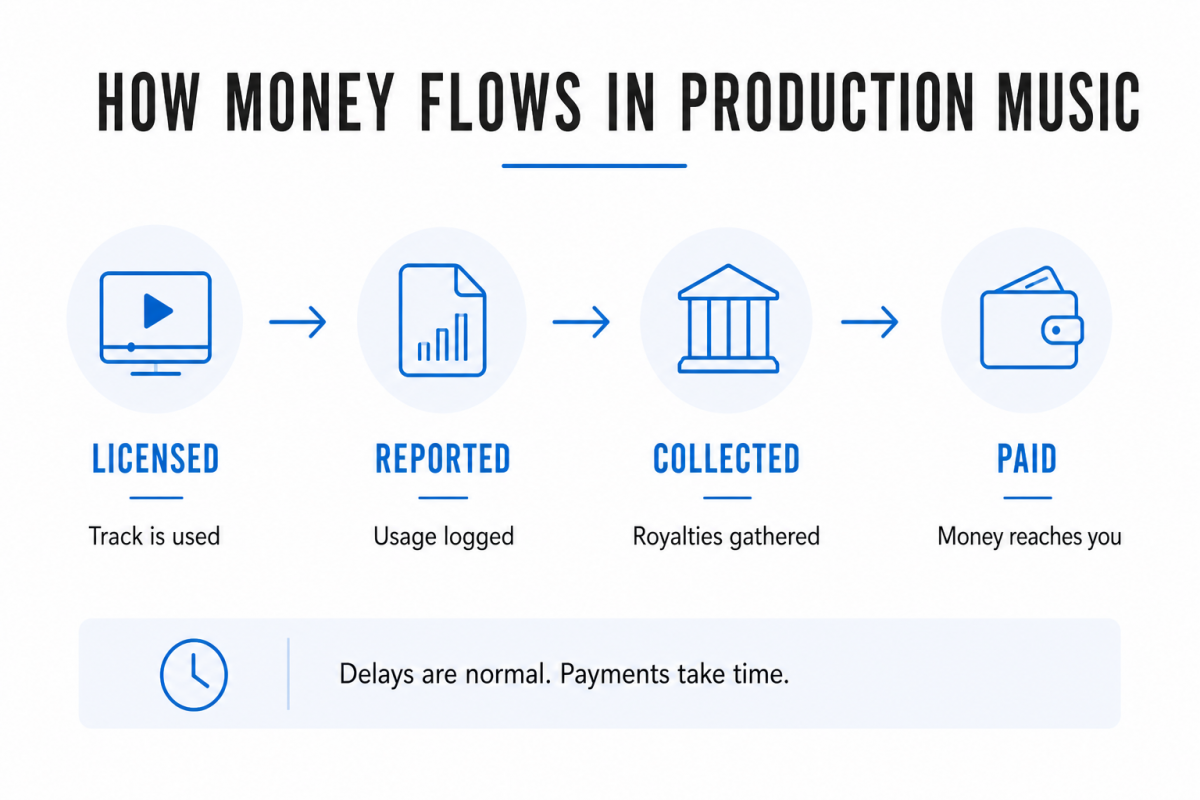
- A track gets licensed for a project.
- A fee may be paid upfront, depending on the deal.
- Usage gets reported through cue sheets or platform data.
- Performance royalties are collected.
- Payments arrive later through royalty statements.
If you’re unsure how that shows up in real terms, this breaks it down:
https://melodyrights.com/royalty-statement-for-music-artists-breakdown
Library vs catalogue vs platform
These terms get mixed up a lot, but they’re not the same thing.
A catalogue is your body of music and its metadata.
A library is a system that licenses music from catalogues.
A platform is a tool that helps you organise, manage, and track your music and its data.
Melody Rights sits in that third category.
It’s not a traditional production music library. It’s a system built to keep your catalogue structured, your rights clear, and your royalty data visible.
If you want to see how that works in practice:
https://melodyrights.com/music-royalty-platform-for-independent-artists
Red flags to watch in library deals
Not every deal is bad, but some are easy to misunderstand.
Watch out for unclear exclusivity, long terms with no way to get your track back, unclear reporting, restrictions on where else your music can go, and vague royalty splits.
If something feels unclear, it usually is. Get it clarified before you agree to anything.
Realistic expectations
Libraries are not a shortcut, they’re a system.
Most tracks won’t get used immediately. Some may never get placed and others might sit for months before finding the right fit. Income tends to come from volume over time, repeat usage, and backend royalties building slowly. Most income in this space is uneven. A few tracks do most of the work over time.
If you’re expecting instant results, this will feel frustrating. If you understand the timeline, it starts to make more sense.
What to do next
If you want to understand how opportunities actually start before they reach libraries:
https://melodyrights.com/music-sync-opportunities-the-real-pipeline
If you want to prepare your music properly for licensing:
https://melodyrights.com/music-licensing-for-film-and-tv
If you want to understand how licensing works at a basic level:
https://melodyrights.com/what-does-royalty-free-mean-the-honest-truth
FAQs
What are production music libraries?
Production music libraries are collections of pre-cleared music that can be licensed for use in film, TV, advertising, and other media. They organise tracks with metadata and handle licensing so buyers can find and use music quickly without complex negotiations.
How do production music libraries work?
Production music libraries work by hosting music that is ready to license. Buyers search the catalogue, select tracks that fit their project, and license them under agreed terms. The library handles the process so music can be cleared and delivered quickly.
What is the difference between exclusive and non-exclusive libraries?
Exclusive production music libraries require you to place a track in one catalogue only, while non-exclusive libraries allow the same track to appear in multiple places. Exclusive deals offer more control from the library, while non-exclusive deals offer more flexibility.
How do royalties work in production music libraries?
Royalties in production music libraries come from how music is used. After a track is licensed and used in a project, usage is reported and performance royalties are collected. Payments usually arrive later through royalty statements rather than immediately.
____________________________________________________________________________
Fact-checked by Bobby Cole, music rights specialist.
____________________________________________________________________________